15 July 2022

Week commencing 15 July 1991

It doesn't matter how big you are - everyone flops at some point, and we'll see that is definitely the case this week in 1991, when one of the most successful recording artists in the world - at the height of her popularity, no less - lands outside the ARIA top 100.  Shall we take a look?
 
Madonna took a 'holiday' from the ARIA top 100 this week in 1991.
 
Top 150 debuts:
 
Number 121 "When Love Comes Down" by The Slow Club
Peak: number 121
Peak date: 15 July 1991
Weeks in top 150: 5 weeks
Top 150 chart run: 121-122-132-136-148
 
Australian band The Slow Club were fronted by Andrew Sefton, and also contained the lead guitarist from English band Japan, Rob Dean.  Surprisingly, Japan never landed a charting single in Australia, but their album Gentlemen Take Polaroids (number 86, March 1981) dented the top 100.  Japan's biggest hit in the UK was "Ghosts", which reached number 5 there in April 1982.

The Slow Club scored two ARIA top 50 hits with their first two releases, "Shout Me Down" (number 36, November 1990) and "Rosalie" (number 46, March 1991).
 
"When Love Comes Down" was issued as the third and final single from The Slow Club's only album World of Wonders (number 101, November 1990).  I don't recall hearing this one before.  A music video probably exists, but has not yet been uploaded online.


Number 148 "Holiday" by Madonna (re-issue)
Peak: number 144
Peak date: 22 July 1991
Weeks in top 150: 3 weeks
Top 150 chat run: 148-144-150
Weeks on chart: 6 weeks
This single originally peaked at number 4 on 14 May 1984, and spent 22 weeks in the top 100.
 
Madonna Ciccone made her understated debut on the Australian chart in November 1983, when "Burning Up", her second single but first Australian release, spent a solitary week at number 95.  "Burning Up", which did not chart anywhere else, would go on to reach number 13 in June 1984 following the success of the next single.  And that next single in question would be... you guessed it, "Holiday", which peaked at number 4 in May 1984.

"Holiday" was the first in a string of 20 consecutive Australian top 40 hits for Madonna, with only one of those missing the top 20.  Madonna's hit streak in Australia came to a crashing halt with "Oh Father" (number 59, January 1990), which, ironically, was the first Madonna song I really connected with.  Yes, you read that right.  Madonna's ubiquity in the 1980s put me off her a bit; she seemed inescapable.  In retrospect, I can appreciate most of Madonna's pre-"Oh Father" singles, but I really liked "Oh Father"... shame the record buying public didn't.

Madonna followed up "Oh Father" with another flop I enjoyed, "Dear Jessie", which spent two consecutive weeks at number 51 in March 1990.  Just when it seemed like Madonna's chart fortunes were waning, she quickly bounced back with one of the biggest hits of her career, "Vogue", which spent five weeks at number one in April and May 1990, becoming the third highest-selling single of 1990 in Australia.  It would, however, be Madge's last Australian number one single for a decade, and none of her other 1990s singles peaked higher than number 4 in Australia.

Madonna's first greatest hits compilation The Immaculate Collection (number 1, November 1990) was released towards the end of 1990, with her film Truth Or Dare (titled In Bed with Madonna in Europe and Australasia) premiering in Australia on 27 June 1991.  Madonna seemed to be the biggest pop star in the world in 1991, despite only releasing two singles that year - one of which was a re-release - and nothing else on the musical front.
 
Following the controversial music video for the lead single from The Immaculate Collection, "Justify My Love" (number 4, December 1990), the follow-up release "Rescue Me" (number 15, March 1991) was released without any promotion, and no music video - though a montage video was put together for the UK market.

The 1991 release of "Holiday" in Australia was an even more-understated affair - I was not aware of its release at the time.  In fact, I had a 'debate' with a Madonna fan over whether "Holiday" was even released here in 1991, despite there being 7", 12" and CD singles listed in The ARIA Report's weekly list of new release titles on 8 July 1991.  Of course there had to have been a local release - whether an Australian pressing or just European imports - for "Holiday" to have registered enough sales to chart in 1991; albeit lowly.

A bunch of earlier Madonna singles were issued on CD in Australia (European imports, I am assuming) on the same date as the 1991 release of "Holiday", but only "Holiday" received vinyl releases at the same time.
 
The CD single for the 1991 release of "Holiday" was titled The Holiday Collection, and contained two of Madonna's earlier hits that were excluded from The Immaculate Collection, "True Blue" (number 5, November 1986) and "Causing a Commotion" (number 7, November 1987) - although the latter is, annoyingly, titled "Causin' a Commotion" on this release.  Only Madonna could leave off international top 10 hits from her greatest hits collection!

Internationally, the 1991 release of "Holiday" peaked at number 5 in the UK in June 1991, number 3 in Ireland, number 24 in the Netherlands in July 1991, number 40 in the Flanders region of Belgium in July 1991, and number 37 in France in August 1991.

The 1991 issue of "Holiday" was the third time the single had reached the UK top 10, after originally peaking at number 6 there in February 1984, and at number 2 in August 1985.  That must be some kind of record - in the pre-streaming era, anyway.  Only in the UK.

Within Australia, the 1991 release of "Holiday" performed strongest in Victoria/Tasmania, where it reached number 107.

Madonna will join us on a surprising number of occasions over the next two and a half years, with the next one being in February 1992.


Number 150 "Borrowed Love" by Bingoboys featuring Arnold Jarvis and Princessa
Peak: number 104
Peak date: 12 August 1991
Weeks in top 150: 9 weeks 
Top 150 chart run: 150-148-140-112-104-123-119-127-140
 
Austrian dance music trio Bingoboys came out of nowhere to land a number 3 hit in Australia with "How to Dance" in May 1991, featuring Princessa on vocals.  It would be their only single to register a place in the ARIA top 100.
 
The act's second single, "Borrowed Love", featured vocals from both Princessa and Arnold Jarvis.  Both tracks were lifted from The Best of Bingoboys (number 72, June 1991), which, despite the title, was the group's first album and was not a compilation.  I recall seeing an infographic over the "How to Dance" music video on Coca-Cola Power Cuts, similar to the format Pop-Up Video later used, explaining that the album was titled The Best of because "it's the best", according to the band.  Hmm.

While "How to Dance" had been a hit across Europe (minus the UK) and even crept into the top 30 on the US Billboard Hot 100, "Borrowed Love" did not follow suit, and the only other place it charted was the US, where it reached number 71 in July 1991.  That being said, only Australian and American pressings of the single are listed on discogs, so perhaps it did not receive a release in Europe.  Europe did receive "No Woman No Cry" which, despite sharing a title with a famous Bob Marley song, is not a cover version.  It was not issued as a single locally.
 
"Borrowed Love" performed better on the Australian Music Report singles chart, where it peaked at number 93.
 
I don't recall hearing "Borrowed Love" before.  It's very different to "How to Dance", but I like it.


Bubbling WAY down under:
 
Number 177 "Whenever You Lay Your Hands on Me" by Clive Young
Peak: number 177
Peak date: 15 July 1991
Weeks on chart: 1 week
 
We last saw Australian singer-songwriter Clive Young in July 1989.  In the interim, Clive switched record companies from EMI to Mushroom, and the album that was scheduled for release in 1989, Naturally, was shelved.

"Whenever You Lay Your Hands on Me" was the lead single from Clive's debut album When the World Goes 'Round, which did not see the light of day until September 1992 (it did not chart).  "Whenever You Lay Your Hands on Me" was released on 29 April 1991, and took almost three months to dent the ARIA top 200 for a solitary week.

On the ARIA state charts, "Whenever You Lay Your Hands on Me" performed strongest in Victoria/Tasmania, as Clive's previous two singles had done, reaching number 154.  The difference between state and national chart peaks for Clive's earlier singles was stark, with "Something Special" peaking at number 15 in Victoria/Tasmania vs. number 50 nationally, and "Naturally" peaking at number 50 in Victoria/Tasmania vs. number 102 nationally.

A music video was filmed for "Whenever You Lay Your Hands on Me", but nobody seems to have their hands on it...

Clive will join us again in 1992.


Number 179 "Long Train Running" by Bananarama
Peak: number 179
Peak date: 15 July 1991
Weeks on chart: 3 weeks
 
Bananarama, whom we last saw in March 1991, really were in chart strife at this point in their career.  None of the four singles lifted from their fifth studio album Pop Life (number 146, August 1991) peaked higher than number 20 in the UK, and none of the album's singles dented the top 50 in Australia.  A combination of being perceived as an 80s act and the Bananarama girls now being in their 30s were probably factors.  The group had also made a deliberate attempt to move away from the Stock Aitken Waterman sound that permeated their work between 1986 and 1989, to lukewarm commercial results.

Although Bananarama made a point of not including any cover versions on their second album Bananarama (number 99, July 1984), which spawned the top 40 hits "Robert de Niro's Waiting" (number 40, August 1984) and "Cruel Summer" (number 32, February 1985), each of their studio albums since had included a cover version, which also ended up being released as a single.  The girls' attitude to releasing covers probably softened following the massive success of "Venus", which resurrected their career and was number 1 in Australia for seven weeks in September and October of 1986.  "Venus" also topped the US Billboard Hot 100 in September 1986.

The Nanas' fourth studio album WOW! (number 1, June 1988) contained a version of The Supremes' "Nathan Jones", which was not a huge hit in Australia, peaking at number 59 in March 1989, after being re-recorded with new band member Jacquie O'Sullivan and tacked onto their The Greatest Hits Collection (number 21, January 1989) compilation. 

A version of The Beatles' "Help!" (number 25, May 1989) was then recorded with French and Saunders' Bananarama parody act Lananeeneenoonoo, including Kathy Bourke as the third member, to raise funds for Comic Relief.

Bananarama covered The Doobie Brothers' 1973 single "Long Train Runnin'", adding a 'g' to the title, for their Pop Life album.  The Doobie Brothers' version peaked at number 58 on the Kent Music Report, but this was on the charts David Kent later compiled retrospectively (they were not published at the time), so I do not consider these official.  The 1993 Sure Is Pure remix of "Long Train Runnin'" peaked at number 67 in Australia in March 1994.

Released as the third Pop Life single, "Long Train Running" peaked at number 30 in the UK in April 1991, number 18 in Ireland in April 1991, number 47 in the Flanders region of Belgium in June 1991, and number 45 in Germany in June 1991.

Domestically, "Long Train Running" performed strongest in Western Australia, where it reached number 122.

I was (and still am, to a large degree) a Bananarama fan when this track was released.  The only place I heard "Long Train Running" at the time was on the Hot 30 Countdown on Fox FM, which was supposedly voted for by listeners.  I tuned in part-way through the song, and recognised that it was Bananarama quickly.  The song seemed familiar to me; I must have heard the original on the radio when growing up.

"Long Train Running" was somewhat different for Bananarama, featuring castanets and flamenco guitars performed by Gipsy Kings, using the name Alma De Noche.  That's the kind of thing Stock Aitken Waterman would never have done, and one of the Nanas commented in a Smash Hits interview in 1990 that their new producer Youth was open to things like putting seagulls on a track, whereas Stock Aitken Waterman would have "laughed that idea out the window".

For whatever reason, Bananarama's music was not connecting with the record-buying public in the early 1990s in the same way it had - albeit inconsistently - during the 1980s.  Following this album's era, the more-experimental sounds of Pop Life would be abandoned, and the girls would return to Stock Waterman (Aitken left in mid-1991) for their next album, which was creatively a step backwards.
 
But before then, a fourth single was released from Pop Life in Europe, "Tripping on Your Love", which was the first Bananarama single to miss the UK top 75 since "Aie a Mwana", their debut release in September 1981.  Jacquie O'Sullivan also quit the group around August 1991, after three and a half years, and there's a solo interview with Keren Woodward from that month where she admits they don't know where Jacquie is right now.  Jacquie speaks of her time in Bananarama in this interesting podcast interview from 2020, which is well worth checking out.  Sara Dallin also gave birth to her daughter Alice towards the end of 1991.

Bananarama have continued on as a duo since 1992, with original band member Siobhan Fahey (who went on to form Shakespears Sister) rejoining them for a live tour in 2017.  Bananarama have a new album Masquerade scheduled for release next week, with the video for the title track, which is the best new Bananarama track I have heard for some time, premiering last month.

We shall see Bananarama next in 1992.


Number 181 "Crazy" by Daisy Dee
Peak: number 156
Peak date: 22 July 1991
Weeks on chart: 3 weeks
 
Daisy Dee, born Desiree Rollocks, is a Dutch "singer, actress, TV host, stylist, and television producer" (thanks Wikipedia).  She was a featured vocalist on MC B's version of Technotronic's 'This Beat Is Techntronic", which was a top 20 hit in the Netherlands, Austria and Germany in 1990.  That single was released in Australia in April 1990, but missed the top 150.

"Crazy" was Daisy's first solo release in Australia, was lifted from her 1992 debut album Daisy Dee.  "Crazy" peaked at number 29 in the Netherlands in September 1990, and number 73 on the US Billboard Hot 100 in April 1991.  The song was used in the Vanilla Ice movie Cool As Ice, but did not make its way onto the accompanying soundtrack album.
 
On the ARIA state charts, "Crazy" performed strongest in New South Wales/Australian Capital Territory, where it reached number 145.
 
Daisy would land her biggest chart success in Australia with a remixed version of this track, "Crazy 96", which reached number 38 in September 1996.  This would be Daisy's only top 100 entry in Australia, although she came within a whisker of the top 100 again in 2000.
 
Daisy will join us next in 1996.


Number 182 "Piece of My Heart" by Tara Kemp
Peak: number 156
Peak date: 19 August 1991
Weeks on chart: 3 weeks
 
American r&b/new jack swing singer Tara Kemp landed her first chart 'hit' in Australia with her first release, "Hold You Tight", which peaked at number 68 in May 1991.  That single was vastly more successful in the US, where it reached number 3 on the Billboard Hot 100 in April 1991, becoming the first of two top 10 hits Tara would land in her home country.
 
"Piece of My Heart" was the second of Tara's US top 10 hits, reaching number 7 on the Billboard Hot 100 in July 1991.  It was the second single from Tara's debut album Tara Kemp, which peaked at number 140 on the ARIA albums chart in April 1991.  Internationally, "Piece of My Heart" peaked at number 81 in Canada in August 1991.

Within Australia, "Piece of My Heart" was most successful in South Australia/Northern Territory, where it reached number 136 on the state chart.
 
I remember hearing both "Hold You Tight" and "Piece of My Heart" on the American Top 40 radio show.
 
A third single from Tara Kemp, "Too Much", was released locally in September 1991, but failed to chart. "Piece of My Heart" was Tara's last single to chart in Australia.


Number 194 "Don't Let Me Down" by The Farm
Peak: number 194
Peak date: 15 July 1991
Weeks on chart: 1 week 

We last saw The Farm in April 1991.
 
"Don't Let Me Down" was the third single issued from the band's first studio album Spartacus (number 106, May 1991).
 
Internationally, "Don't Let Me Down" peaked at number 36 in the UK in April 1991, number 29 in Ireland in May 1991, and number 78 in Germany in June 1991.
 
Locally, "Don't Let Me Down" performed strongest in New South Wales/Australian Capital Territory, where it reached number 169.
 
We'll next see The Farm in 1992


Next week (22 July): Four top 150 debuts and one bubbling WAY down under entry.
 
< Previous week: 8 July 1991                                         Next week: 22 July 1991 >

13 July 2022

Kent Music Report beyond the top 100: 13 July 1981

This week in 1981 there were another two new singles bubbling beneath the top 100 that would not eventually break through.  Shall we take a look?
 
Randy Meisner: hearts may be on fire, but the charts ain't.
 
Beyond the top 100:
 
Position 19 "Hearts on Fire" by Randy Meisner
Highest rank: 10th
Peak date: 27 July 1981
Weeks on below list: 4 weeks
 
Randall Meisner was a founding member of Eagles (no 'The'), as their bass player.  He also provided backing vocals for the band, and sang lead on their 1975 single "Take It to the Limit", which I am surprised to learn only peaked at number 30 in Australia in April 1976.  If our charts had incorporated airplay, "Take It to the Limit" probably would have been number 1 for about 20 weeks, as it was still on heavy rotation when I was in kindergarten in 1983.  Gotta love Australian FM radio in the 80s...  I actually thought for a long time that Eagles' "New Kid in Town" (number 16, March 1977) and Billy Joel's "Just the Way You Are" (number 6, May 1978) were new songs in 1983-4, as radio was still playing them so frequently then - at least on the station(s) my parents listened to.
 
Randy was also in the band Poco, who bubbled under in January 1990, but quit the band before their first album was released.

Randy's solo chart career only yielded one moderate hit single in Australia, with "Deep inside My Heart" (number 34, May 1981), which featured uncredited (on the single) guest vocals from Kim Carnes.  Like most people, I once wrongly assumed Kim Carnes was a one-hit wonder, but she seems to show up quite frequently on side projects like this, as well as having her own non-"Bette Davis Eyes" moderate hits.
 
"Hearts on Fire" was the second single lifted from Randy's second studio album One More Song (number 83, April 1981).  The single peaked at number 19 on the US Billboard Hot 100 for three consecutive weeks in March 1983 - thank you Craig, if you're reading this, for giving me your copy of Joel Whitburn's Billboard Hot 100: The Eighties book, as without it I would not have been able to verify this fact (thanks to the bug-laden Billboard website).  This was Randy's highest-peaking single on the Hot 100.
 
"Hearts on Fire" was Randy's final single to (sort of) chart in Australia.


Position 21 "Rugby League Song (N.S.W.)" by Danny McMaster
Highest rank: 16th
Peak date: 20 July 1981
Weeks on below list: 3 weeks
 
I think I've written before that I would literally rather watch paint dry than watch a game of football or rugby, or 99.9% of other sports, for that matter.  But there's one thing that's even worse than sport - songs about sport.  Ugh.  The only good thing I can say about this one is that some kind (?) soul has uploaded it to YouTube, which I was not expecting for a flop single about sport by an Australian singer from 41 years ago.  I guess there are some things we can be thankful for about ardent sport fans.
 
"Rugby League Song (N.S.W.)" was written by Danny, who had no other 'charting' singles.  I think I can safely assume that this single was most successful in New South Wales.

A reader has kindly informed me that a Danny McMaster narrated Australia's Funniest Home Videos in the 1990s, around the time that Jo Beth Taylor was hosting.  Could this be the same guy?


Next week (20 July): Three new singles bubbling under the top 100.
 
< Previous week: 6 July 1981                                            Next week: 20 July 1981 >

08 July 2022

Week commencing 8 July 1991

Only three of the eleven artists debuting and peaking outside the ARIA top 100 this week in 1991 we have seen before.  Before we take a look at them, I have updated some earlier posts with the following:
  • 6 March 1989 - a new bubbling WAY down under entry from Schnell Fenster;
  • 25 June 1990 - a new bubbling WAY down under entry from Peter Wolf;
  • 29 October 1990 - a new bubbling WAY down under entry from John Williamson.
Chris Isaak: dancin' just outside the ARIA top 150.
 
Top 150 debuts:
 
Number 135 "Sugar Daddy" by Mighty Big Crime
Peak: number 135
Peak date: 8 July 1991
Weeks in top 150: 8 weeks
Top 150 chart run: 135-144-138-142-137-140-149-147
Weeks on chart: 10 weeks
 
We last saw Melbourne hip-hop duo Mighty Big Crime in October 1990 - although no video or audio was available for that track, and that continues to be the case.  This time, however, someone has thankfully uploaded the music video to YouTube.

"Sugar Daddy" was Mighty Big Crime's fifth and final single, and their second ARIA top 150 entry.  I remember hearing this one at the time, but could not remember how the song went.

On the state charts, "Sugar Daddy" was most popular in Victoria/Tasmania, where it reached number 90.
 
Mighty Big Crime roped in a few new 'hot' female members - Sophie Lee notably among them - and rebranded themselves as Freaked Out Flower Children later in 1991.  They landed a top 40 hit with their version of Eric Burdon & War's "Spill the Wine" (number 31, February 1992).

We will see Freaked Out Flower Children bubble under in 1992.


Number 142 "Power of Love/Love Power" by Luther Vandross
Peak: number 109
Peak date: 12 August 1991
Weeks in top 150: 9 weeks
Top 150 chart run: 142-127-125-114-130-109-132-138-138
Weeks on chart: 13 weeks
 
Despite having notched up a decade of charting singles and albums in his native US at this point, smooth-voiced American singer Luther Vandross had not yet made any major impact in Australia, with "Power of Love/Love Power" (which is one song and not a double A-side) being his first single to chart down under.  Luther had earlier placed an album on the ARIA chart, however, with his sixth studio album Any Love peaking at number 103 in April 1989, despite there being no charting singles from it.

"Power of Love/Love Power" was the lead single from Luther's seventh studio album Power of Love (number 110, July 1991).  Internationally, the single peaked at number 46 in the UK in May 1991, number 4 on the US Billboard Hot 100 in June 1991, and number 45 in New Zealand in August 1991.
 
Within Australia, "Power of Love/Love Power" was most popular in New South Wales/Australian Capital Territory, where it reached number 86.
 
I don't recall hearing this one at the time, though probably caught it on the American Top 40 radio show.  I first became aware of Luther via hearing "Here and Now" on American Top 40 in early 1990.
 
Luther would finally land a major hit in Australia with his duet with Janet Jackson, "The Best Things in Life Are Free", which spent five weeks at number 2 in October and November 1992, becoming the sixth highest-selling single of 1992 in Australia.  Luther's only other ARIA top 50 single "Endless Love" (number 2, September 1994), coincidentally, was another duet, this time with Mariah Carey, and also peaked at number 2.

Luther passed away in 2005, aged 54, following a heart attack.  Just over two years earlier, Luther had a major stroke, which affected his mobility and his ability to both speak and sing.

We will next see Luther in 1993.


Number 144 "Light My Fire" by The Doors (1991 release)
Peak: number 130
Peak date: 15 July 1991
Weeks in top 150: 4 weeks
Top 150 chart run: 144-130-139-141
The original release of "Light My Fire" peaked at number 16 in Australia on the Go Set singles chart in September 1967.
 
American rock band The Doors formed in Los Angeles in 1965.  Front man Jim Morrison died unexpectedly in Paris in 1971, aged 27, in uncertain circumstances (French law did not require an autopsy to be conducted) - though drugs and/or alcohol were probably involved.  The band continued, however, until 1973, reforming for another album in 1978.

"Light My Fire" was recorded in August 1966, and was released on the band's debut album The Doors in January 1967.  The track was issued as the second single from the album a few months later.  "Light My Fire" reached number 1 on the US Billboard Hot 100 in July 1967, spending three weeks at the summit.  "Light My Fire" also peaked at number 2 in Canada, number 49 in the UK in August 1967, and number 16 in Australia in September 1967.

The Doors, a biographical film directed by Oliver Stone, premiered in March 1991, with Val Kilmer playing the role of Jim Morrison.  The Doors soundtrack album (number 11, June 1991), consisting largely of Doors' songs, was promoted by a re-issue of the band's debut single "Break on Through (To the Other Side)", which reached number 97 on the ARIA singles chart in June 1991.

"Light My Fire" was re-released as the second single from The Doors soundtrack.  The 1991 issue of the single peaked at number 7 in the UK in June 1991, number 1 in Ireland, number 27 in the Netherlands in July 1991, and number 41 in the Flanders region of Belgium in July 1991.

We will see The Doors again in 1993.


Number 145 "Johnny's Gone" by Catfish
Peak: number 129
Peak date: 29 July 1991
Weeks in top 150: 8 weeks 
Top 150 chart run: 145-142-140-129-131-132-138-135
 
We saw Australian band Catfish, fronted by Don Walker from Cold Chisel, back in March 1989.
 
"Johnny's Gone" was the lead single from the second, and final, Catfish album Ruby (number 98, September 1991).

A second single from Ruby, "Crooked Smile", was released in November 1991, but missed the ARIA top 150.
 
If you can't make it through one of Richard Wilkins' inane interviews, skip to 1:09 in the video embedded below.  Alternatively, you can listen to the song (without the music video visuals) here.


Number 147 "Save Some Love" by Keedy
Peak: number 145
Peak date: 15 July 1991
Weeks in top 150: 2 weeks
Top 150 chart run: 147-145
Weeks on chart: 11 weeks
 
American freestyle singer Keedy, who uses her surname as her stage name (her first name is Kelly Ann), launched her recording career with this track, which was the lead single from her only album Chase the Clouds (released in Australia in July 1991, did not chart).  "Save Some Love" was co-produced by Michael Jay, who produced Martika's debut album Martika (number 2, January 1990).
 
"Save Some Love" reached number 15 in the US.  Within Australia, "Save Some Love" performed strongest in New South Wales/Australian Capital Territory, where it reached number 117.

I probably heard "Save Some Love" on the American Top 40 radio show at the time, but have no recollection of it.  The song and video capture that early 90s look/sound so well.  I think this would have been a bigger hit locally if it had a promotional tie-in with Blossom, Beverly Hills 90210, Baywatch or a similar American program from this era that appealed to teens and young adults.  "Save Some Love" is my favourite track among this week's debuts.
 
Keedy's second single, the Diane Warren-penned "Wishing on the Same Star" (released in Australia in August 1991, did not chart), peaked at number 86 in the US in August 1991.  Australian girl group Girlfriend released a cover version of "Wishing on the Same Star", which peaked at number 44 on the ARIA singles chart in January 1994. 

"Save Some Love" was Keedy's only release to chart in Australia.


Number 148 "Place with No Love" by Choirboys
Peak: number 110
Peak date: 29 July 1991
Weeks in top 150: 6 weeks 
Top 150 chart run: 148-118-121-110-123-127
 
Sydney pub rock band Choirboys (no 'The') formed in 1979.  They would have to wait until 1983 for their first taste of chart success, with "Never Gonna Die" peaking at number 30 on the Kent Music Report singles chart in August 1983.  Their biggest hit was, of course, "Run to Paradise" (number 3, November 1987).  The band placed seven singles on the top 100 between 1983 and 1991.

"Place with No Love" was the third and final single lifted from Choirboys' third studio album Midnight Sun (number 30, May 1991).  It followed "Empire" (number 65, December 1989) [re-titled "Our Empire Falls" on the album] and "Rendezvous" (number 40, April 1991).

I don't recall hearing this one before.  It would become the band's last release of new material to make the ARIA top 150, although a Nick Skitz remix of "Run to Paradise" (which I hadn't heard before and am kind of awestruck at how awful it is) would reach number 16 in July 2004.

Choirboys drummer Lindsay Tebbutt died in December 2021, following an illness with mesothelioma.


Bubbling WAY down under:
  
Number 162 "Dancin'" by Chris Isaak (1991 release)
Peak: number 151
Peak date: 15 July 1991
Weeks on chart: 3 weeks 
This single originally peaked at number 46 on 12 May 1986, and spent 14 weeks in the top 100.
 
American singer and occasional actor Chris Isaak made his understated Australian chart debut in 1986 with his first single "Dancin'", which reached number 46 in May of that year.  The track is lifted from Chris' debut album Silvertone (number 77, June 1986).  As I was 7 years old for most of 1986 and not yet properly into music and charts, I was not aware of "Dancin'"'s first Australian release.

Chris landed his first proper Australian hit with "Wicked Game" (number 15, April 1991), which appeared on his third album Heart Shaped World (number 117, August 1989).  "Wicked Game" was featured in the 1990 David Lynch film Wild at Heart.  While the single was released in Australia in early November 1990, it did not enter the chart until mid-January 1991, climbing into the top 50 in March.  I am guessing the single's belated success was due to there being renewed interest in all things related to David Lynch, following the success of his Twin Peaks TV series.

"Blue Hotel" (number 23, May 1991), which originally appeared on Chris' second album Chris Isaak (number 148, August 1999) released in 1987, was re-issued as a follow-up to "Wicked Game".  "Blue Hotel" had originally been released in Australia as a single in July 1987, but failed to chart.  Both tracks were lifted from the compilation album Wicked Game (number 8, May 1991), containing a mixture of tracks from Chris' first three albums.  The Wicked Game compilation was released only in Europe and Australasia, as a way of introducing Chris' new fans to his body of work.
 
"Dancin'" was released as the third single from Wicked Game.  It did not repeat the success of the previous two singles, stalling just outside the ARIA top 150.

Internationally, the 1991 re-release of "Dancin'" peaked at number 100 in the UK in April 1991, number 29 in Ireland in April 1991, and number 64 in the Netherlands in July 1991.
 
Domestically, the 1991 issue of "Dancin'" performed strongest in Queensland, where it reached number 139.

We shall next see Chris in 1993.


Number 164 "Gotta Have You" by Stevie Wonder
Peak: number 164
Peak: 8 July 1991
Weeks on chart: 2 weeks
 
Stevie Wonder needs no introduction.  During the 1970s and 1980s, Stevie placed 26 singles on the Australian top 100, with "I Just Called to Say I Love You" reaching number 1 for eight weeks between October and December 1984.  Stevie's last big solo (not duet or a featured artist) song in Australia was "Part Time Lover" (number 3, October 1985).

"Gotta Have You" was recorded for the Jungle Fever soundtrack (number 109, July 1991), which was also a Stevie Wonder album.  The single peaked at number 92 on the US Billboard Hot 100 in July 1991.

Within Australia, "Gotta Have You" was most popular in Queensland, where it reached number 143.

I don't recall hearing this track before.  It somehow seems a bit jarring hearing Stevie singing over an early 90s r&b sound.

Stevie will next join us in 1995.


Number 180 "I Don't Even Know If I Should Call You Baby" by Soul Family Sensation
Peak: number 180
Peak date: 8 July 1991
Weeks on chart: 2 weeks

British trio Soul Family Sensation consisted of members Johnny Male, Guy Batson and Jhelisa Anderson.  "I Don't Even Know If I Should Call You Baby" was their debut, and in Australia, only, single release.  Internationally, the single peaked at number 49 in the UK in May 1991, and was lifted from their only album New Wave (released in Australia in October 1991, did not chart).

In Australia, "I Don't Even Know..." performed strongest in New South Wales/Australian Capital Territory, where it reached number 160.

I was not aware of this one at the time.  Vocalist Jhelisa Anderson would go on to perform on The Shamen's "LSI (Love Sex Intelligence)" (number 53, January 1993) and "Phorever People" (number 63, February 1993).
 
Another track from New Wave, "The Day You Went Away", would go on to become a number 2 hit in Australia in November 1992 when covered by Canadian-Australian singer Wendy Matthews.  Soul Family Sensation’s version of this track stalled at number 142 (number 101 on the compressed chart) in the UK in March 1992.

While we will not see Soul Family Sensation again, a cover version of this song will bubble WAY down under in 1995.


Number 185 "Place in This World" by Michael W. Smith
Peak: number 184
Peak date: 12 August 1991
Weeks on chart: 2 weeks
 
Michael W. Smith - the W. stands for Whitaker (I think he was wise to use an initial instead) - is an American artist whom I knew nothing about prior to writing this post.  I was watching the music video embedded below as I wrote this, and my first thought, before I consulted Wikipedia, is that "this sounds a bit like a male Amy Grant."  Lo and behold, Amy actually co-wrote this track with Michael W. and Wayne Kikpatrick.  Like Amy, Michael W. dabbled in both 'contemporary Christian' music and the mainstream charts (in the US).  Michael has been releasing music since 1983.
 
"Place in This World" was issued as the second single (the first in Australia) from Michael W.'s sixth studio album Go West Young Man (released in Australia in July 1991, did not chart).  The single reached number 6 on the US Billboard Hot 100 in July 1991, becoming his biggest 'pop' hit there.
 
Within Australia, "Place in This World" performed strongest in New South Wales/Australian Capital Territory, where it reached number 165.

Like Keedy and Luther Vandross above, I don't recall hearing this one at the time, despite being a casual listener of American Top 40.  Perhaps I tuned out for a couple of months?

Michael W. never landed a top 100 single or album in Australia, and did not have a charting album here until 1998.  We will see him again in December 1991.


Number 187 "92° F"/"The Incredible PWEI vs Dirty Harry" by Pop Will Eat Itself
Peak: number 187
Peak date: 8 July 1991
Weeks on chart: 2 weeks

We last saw Pop Will Eat Itself in January 1991.

"92° F"/"The Incredible PWEI vs Dirty Harry" was issued as the fourth and final single from the band's third studio album Cure for Sanity (number 51, February 1991).  Internationally, the single peaked at number 23 in the UK in June 1991.

In Australia, "92° F"/"The Incredible PWEI vs Dirty Harry" performed strongest in Western Australia where it reached number 146.

We'll next see Pop Will Eat Itself in 1992.


Next week (15 July): Three top 150 debuts and five bubbling WAY down under entries.  Among them is, surprisingly, a single from one of the biggest artists in the world in 1991.
 
< Previous week: 1 July 1991                                      Next week: 15 July 1991 >

06 July 2022

Kent Music Report beyond the top 100: 6 July 1981

One thing this week in 1981's debuts have in common is that this will be the only occasion we will see the artists in question.  Let's take a look at them.
 
Anne Murray was not 'blessed' with the chart position for her latest release.
 
Beyond the top 100:
 
Position 4 "I Don't Mind" by The Hitmen
Highest rank: 2nd
Peak date: 13 July 1981
Weeks on below list: 4 weeks
 
Ironically named in retrospect, Australian band The Hitmen never actually landed a 'hit' in Australia, with none of their releases charting higher than number 67.
 
Formed by Radio Birdman backing singer Johnny Kannis in 1977, The Hitmen were originally named Johnny and The Hitmen.  Following Radio Birdman's 1978 tour, two of that band's members joined, and they became The Hitmen; although they are credited as just 'Hitmen' on some releases, including this one.  Regular readers will know that I don't like inconsistency with band names involving 'The'!
 
The Hitmen's biggest single in Australia was "Didn't Tell the Man" (number 75, August 1979).  For reasons I cannot determine (it was released on the same label), stupidly this track did not appear on the band's debut album Hitmen (number 67, 1981) - although it does show up on an expanded 2-CD re-issue of the album in 2007.
 
The Hitmen only landed only one other top 100 single, with "I Want You" (number 98, June 1980), which does appear on their first album.
 
"I Don't Mind" also appears on the Hitmen album, and narrowly missed the top 100.
 
The group placed one further single on the Kent Music Report 'Hit Predictions' list (where the titles are not ranked in order of sales) in May 1982, with "Everybody Knows (I Don't Like Love)".  Although signed to a different label, they repeated the mistake of not including the track on their second album It Is What It Is (number 81, December 1982) - though it does appear on the 2007 re-issue, which was the final Hitmen release to make the top 100.


Position 25 "Blessed Are the Believers" by Anne Murray
Highest rank: 15th
Peak date: 20 July 1981
Weeks on below list: 6 weeks
 
My impression from the song title "Blessed Are the Believers" was that it was going to be a god-bothering tune - but, instead, the song is about believing in love.  Given the performer was Anne Murray, I was also expecting a country-ish tune, and I was right about that.
 
Canadian singer Anne Murray, born Morna Anne Murray, placed 13 singles on the Kent Music Report top 100 between 1970 and 1986, with "You Needed Me" (number 2, December 1978) being the biggest of those. 

"Blessed Are the Believers" was the lead single from Anne's sixteenth studio album Where Do You Go When You Dream (number 69, July 1981).

Internationally, "Blessed Are the Believers" peaked at number 34 on the US Billboard Hot 100 in May 1981.
 
This would be Anne's only appearance on the beyond number 100 list.


Next week (13 July): Two more singles peaking outside the top 100.

< Previous week: 29 June 1981                                           Next week: 13 July 1981 >

01 July 2022

Week commencing 1 July 1991

Well, we're now exactly at the mid-way point through 1991.  And what better way to mark this milestone than with one of the most hotly-anticipated songs (for me) I have had to write about so far!  Read on to find out more...

Samantha Fox: just because you're laughing (at the song title), doesn't mean that it'll be charting!

Top 150 debuts:

Number 125 "Ludi" by Dream Warriors
Peak: number 117
Peak date: 8 July 1991
Weeks in top 150: 5 weeks
Top 150 chart run: 125-117-122-128-131

Canadian hip-hop duo Dream Warriors to date had placed two singles in the lower half of the ARIA top 100, with "Wash Your Face in My Sink" (number 57, January 1991) and "My Definition of a Boombastic Jazz Style" (number 65, March 1991).

"Ludi" was issued as the third single from the duo's debut album And Now the Legacy Begins (number 53, March 1991).  "Ludi" peaked at number 56 in Dream Warriors' native Canada - oddly, their only single to chart there.  Elsewhere, the single peaked at number 39 in the UK in March 1991, number 24 in Ireland, and number 48 in the Netherlands in March 1991.

I don't recall hearing this one before.  "Ludi" was Dream Warriors' final single to dent the ARIA top 150.


Number 127 "Silent Lucidity" by Queensrÿche
Peak: number 104
Peak date: 14 October 1991
Weeks in top 150: 16 weeks
Top 150 chart run: 127-125-120-113-117-119-122-127-125-(out for 2 weeks)-149-147-106-110-104-115-128
Weeks on chart: 24 weeks

American progressive metal band Queensrÿche last paid us a visit in October 1990.  "Silent Lucidy" was the second single issued in Australia from the band's fourth studio album Empire (number 127, November 1990).

"Silent Lucidity" peaked at number 9 on the US Billboard Hot 100 in June 1991, becoming their biggest hit there and only top 100 entry.  The single also peaked at number 46 in Germany in June 1991, number 21 in the Netherlands in June 1991, number 24 in Switzerland in June 1991, number 11 in New Zealand in July 1991, and number 18 in the UK in August 1992 (after originally peaking at number 34 there in May 1991).
 
"Silent Lucidity" performed much stronger on the South Australia/Northern Territory state chart, where it reached number 21, than elsewhere.  Its next-highest state chart peak was number 69, in Western Australia.  It peaked outside the top 100 on the remaining three state charts.  "Silent Lucidity" also peaked higher on the Australian Music Report singles chart, reaching number 74.

"Silent Lucidity" would become Queensrÿche's last single to dent the ARIA top 150.  The band's 1994 album Promised Land (number 79, November 1994) peaked within the ARIA top 100, however.

Despite missing the ARIA top 100, "Silent Lucidity" holds a three-way tie in third position for the most weeks spent in the top 150 for a 1991-debuting single that missed the top 100.  Its 16-week top 150 chart-run ties with Chesney Hawkes and another single we will see in October 1991.  "Silent Lucidity" was still charting at the end of October 1991; its top 150 chart run was broken for two weeks in early September.

I have heard this one before, but can never remember how the song goes.  It seems that metal acts were scoring their last breath of commercial success around this time by putting out ballads or acoustic tracks that were less typical of their usual sound.

Queensrÿche will join us again in 1992.


Number 134 "Heroes Let You Down" by Schnell Fenster
Peak: number 132
Peak date: 5 August 1991
Weeks in top 150: 6 weeks
Chart run: 134-150-141-141-145-132
Weeks on chart: 6 weeks

Schnell Fenster, which translates from German as 'fast window', was a band formed in Melbourne, made up of New Zealanders.  All but one of the five members of Schnell Fenster had formerly been in Split Enz or The Swingers.  We last saw Schnell Fenster in 1989.
 
Despite the band's pedigree, Schnell Fenster failed to achieve major commercial success in Australia with none of their releases denting the ARIA top 50.  Their debut single, "Whisper" (number 56, August 1988), came nearest, with subsequent singles "Love Hate Relationship" (number 83, November 1988) and "OK Alright A Huh Oh Yeah" (number 88, October 1990) languishing in the 80s.  The group's debut album Sound of Trees (number 82, October 1988) followed similarly.

"Heroes Let You Down" was the belated second single from Schnell Fenster's second album OK Alright A Huh Oh Yeah (number 117, July 1991), coming nine months after the title track was released.  "Heroes Let You Down" was to be the band's final single, with the group splitting in 1992.

While "OK Alright A Huh Oh Yeah" seemed to receive a moderate amount of radio and TV exposure, I do not recall hearing "Heroes Let You Down" before.


Number 140 Some Like It Hot EP by Marilyn Monroe
Peak: number 140
Peak date: 1 July 1991
Weeks in top 150: 1 week
Top 150 chart run: 140

American actress, singer and model Marilyn Monroe, born Norma Jeane Mortenson, needs no introduction.  But Marilyn as a chart star?!

The title track on this EP, "Some Like It Hot", was recorded in 1959, for the movie of the same name.  I am not sure why this EP was released in 1991.  To confuse matters further, "Some Like It Hot" is track three on the single, with two mixes of "I Wanna Be Loved by You" - the 'Mr President Mix' and the original, appearing before it.  Given that "I Wanna Be Loved by You" has been remixed for this release, I assume it was actually the main/promoted track from the EP, rather than "Some Like It Hot", and have listed it first below.  "I Wanna Be Loved by You" also originally appeared in the 1959 film Some Like It Hot.

As far as I can establish, this EP was an Australian-only release.

Of course, Marilyn sadly took her own life in 1962, aged 36.


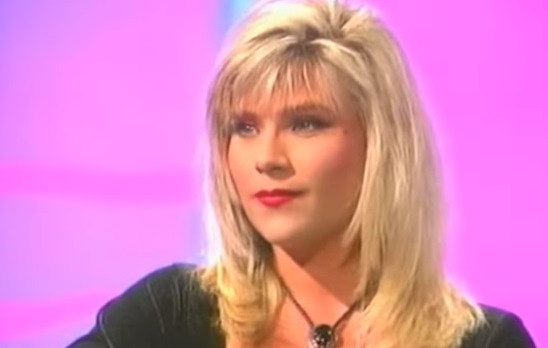
Number 147 "(Hurt Me! Hurt Me!) But the Pants Stay On" by Samantha Fox
Peak: number 123
Peak date: 22 July 1991
Weeks in top 150: 6 weeks
Chart run: 167-147-149-124-123-143-144
Weeks on chart: 7 weeks

From one blonde bombshell to another, English singer Samantha Fox came to fame as a page 3 topless model for The Sun newspaper at a tender 16 years of age.  While launching a singing career a few years later might seem like a cynical move, Sam had always had her sights set on becoming a pop star, and even had her own pre-fame flop band S.F.X., who released the single "Rockin' with My Radio" in 1983.

Sam's solo career proper was launched in 1986 with the raunchy "Touch Me (I Want Your Body)", which topped the Australian singles chart for three non-consecutive weeks in July 1986, interrupted by Whitney Houston's - who we saw last week - "Greatest Love of All".  On "Touch Me...", Sam displays her rock vocal prowess, which is not the paper-thin voice that can barely hold a note (not that there's anything wrong with that) you might expect from a model-turned-singer.
 
Between 1986 and 1989, Samantha notched up eight Australian top 100 singles.  While nothing matched the massive success of "Touch Me...", Sam had two further top 20 hits in Australia, and the Stock Aitken Waterman-produced "Nothing's Gonna Stop Me Now" (number 22, August 1987) narrowly missed out.

The saucy song titles continued, as did the brackets, with subsequent hits "Do Ya Do Ya (Wanna Please Me)" (number 18, October 1986) and "Naughty Girls (Need Love Too)" (number 64, June 1988) - the latter becoming Sam's biggest hit in the US, reaching number 3 there in June 1988.
 
A surprising fact is that Samantha was the only British female solo artist to score three top 10 singles in the UK and US during the 1980s - with five different tracks among those, no less.  Not bad for an artist whom many inaccurately label a "one hit wonder" (not that there's anything wrong with being one of those!).

As this is probably the only occasion I will get to write about Sam, I thought I would mention some of my favourite flop singles of hers, in case you haven't head them - "I Surrender (To the Spirit of the Night)" (released in Australia in August 1987, did not chart) and "I Promise You (Get Ready)" (not issued as a single in Australia, but peaked at number 58 in the UK in October 1987), both from her second album Samantha Fox (number 86, August 1987).

Issued as the lead single from her fourth studio album Just One Night (number 167, August 1991), "(Hurt Me! Hurt Me!) But the Pants Stay On" surely has the sauciest song title of all among Sam's catalogue.  However, the song was intended to be a safe-sex anthem, released during the peak of the AIDS epidemic, about not immediately jumping into bed with someone who fancies you, with lyrics like "you can want my body all night long, but the pants stay on" and "my reputation says I'm not one for hesitation, but when it comes to sex, I'm very, very patient".  Ooh er Missus!

The intended message of "Hurt Me..." was lost in the racy song title, with people assuming it was a song about sadomasochism.  The "(Hurt Me! Hurt Me!)" part of the title, however, is a crowd chant heard in the clubs back then, kind of meaning 'play that song Mr. DJ!'  But when coupled with "but the pants stay on",  it's easy to see why the song's message was obscured.

For "Hurt Me...", Sam teamed up with Full Force, who were behind her post-"Touch Me" American top 10 hits "Naughty Girls..." and "I Wanna Have Some Fun" (number 80, July 1989).  The production on "Hurt Me..." sounds to me like they were trying to emulate the C + C Music Factory sound, and I actually thought C + C Music Factory were involved until checking the credits for this post.

While I distinctly recall reading about "Hurt Me..." in pop magazines at the time, and I think the title even got a mention on Fox FM in Melbourne (which didn't play any non-'credible' female pop at all in 1991), I did not hear "Hurt Me..." until downloading the track out of curiosity in the early 2000s.  While I like the song, it doesn't quite live up to its title.
 
Sam's previous album I Wanna Have Some Fun (number 151, March 1989) had indeed been 'fun', but the album "Hurt Me..." is from, Just One Night, is just... awful, and was a huge misstep in Sam's career.  The 2012 expanded re-issue of Just One Night was partly salvaged by inclusion of a spruced up demo Sam recorded for the album with Stock Aitken Waterman, "That's What Love Can Do", which went on to become a US top 20 hit for Boy Krazy, who we will see in 1993.

Oddly, Australia was the only country "Hurt Me..." charted in that I can verify.  The single performed strongest on the South Australia/Northern Territory state chart, where it reached number 102.

A second single from Just One Night, "Another Woman (Too Many People)", was released in Australia in September 1991, but failed to chart.  Sam then did not release a single in Australia again until 1997, with "Let Me Be Free", which also did not chart.
 
"(Hurt Me! Hurt Me!) But the Pants Stay On" would be Samantha's final single to chart in Australia.  She would, however, have a further album register on the ARIA albums chart, with Angel with an Attitude (number 476, August 2007).

Samantha recently married her girlfriend of six years, Linda Olsen.


Number 148 "California Dreamin" by The Midnight Shift featuring Robin Wright and Issy Van Randwyck
Peak: number 134
Peak date: 29 July 1991
Weeks in top 150: 6 weeks
Top 150 chart run: 148-137-146-143-134-139

"California Dreamin'" (note apostrophe) was written by John and Michelle Phillips, from The Mamas and the Papas - who were Chynna Phillips from Wilson Phillips' actual mama and papa - in 1963.  The song was first recorded by Barry McGuireThe Mamas and the Papas' own version, however, is the best-known one, and was released in 1965.

The Midnight Shift appear to be a British act, but their version of "California Dreamin" - minus the apostrophe - appears to have only been released on CD single in Australia, with only 12" vinyl UK and Spanish pressings listed on discogs.  The wonderfully (?) cheap video embedded below was on an Australian VHS compilation designed for play in nightclubs and retail outlets that I picked up on eBay last year for a silly price.  Yes, I sometimes go to great lengths for these chart recaps...

This single performed better on the Australian Music Report singles chart, where it reached number 94.


Number 149 "Yo!! Sweetness" by MC Hammer
Peak: number 149
Peak date: 1 July 1991
Weeks in top 150: 1 week
Known chart run: 152-149
Weeks on chart: 4 weeks

Stanley Burrell, better known as MC Hammer, burst onto the Australian chart in 1990 with the lead single from his second album "U Can't Touch This", which was number 1 for five weeks in July and August 1990.  The follow-up release "Have You Seen Her" (number 42, September 1990), however, stalled outside the top 40.  "Pray" (number 8, January 1991) returned MC Hammer to the top 10, but fourth single "Here Comes the Hammer" (number 37, April 1991) just crept into the top 40.
 
"Yo!! Sweetness" was released as the fifth and final single from Please Hammer Don't Hurt 'Em (number 5, August 1990) in Australia.  While I remember seeing the single in the shops, I did not hear the track at the time, and it barely crept into the ARIA top 150.  By mid-1991, Hammer, together with pop-rap rival Vanilla Ice, seemed to be a bit passe and uncool.

Internationally, "Yo!! Sweetness" peaked at number 16 in the UK in June 1991, and number 11 in Ireland.  The track was not released as a commercial single in North America.
 
On the state charts, "Yo!! Sweetness" performed strongest in Victoria/Tasmania, where it reached number 111.

The music video for "Yo!! Sweetness", embedded below, uses the LP version of the track, but the single version, both here and in Europe, was the Boilerhouse Radio Mix, which I have embedded beneath it.  The Boilerhouse Mix of "Yo!! Sweetness" prominently samples Cameo's "Word Up" (number 6, March 1987), while both versions sample Rick James' "Give It to Me Baby" (which oddly did not chart in Australia).

We will next see MC Hammer in October 1991.


Bubbling WAY down under:

Number 200 "Down to Earth" by Monie Love
Peak: number 152
Peak date: 8 July 1991
Weeks on chart: 2 weeks

British rapper Monie Love, born Simone Johnson, made her debut on the Australian chart in 1989 with "Grandpa's Party" (number 93, September 1989).  She followed it up over a year later with another minor hit, "It's a Shame (My Sister)" (number 90, February 1991); interim single "Monie in the Middle" (released in Australia in August 1990) failed to chart.  Monie's biggest Australian hit came next, with "Ring My Bell" (number 35, May 1991), a duet with Adeva.
 
"Down to Earth", the title track from Monie's debut album Down to Earth (number 114, July 1991), was released overseas in late 1990, before "Ring My Bell".  The single's release, for whatever reason, was pushed back in Australia.
 
Internationally, "Down to Earth" peaked at number 31 in the UK in December 1990, number 33 in Germany in January 1991, number 15 in Switzerland in February 1991, and number 29 in the Netherlands in March 1991.
 
Within Australia, "Down to Earth" was most-successful on the New South Wales/Australian Capital Territory state chart, where it reached number 136.
 
Of note is that "Down to Earth" is the earliest single I have a number 200 or below position for, at the time of writing this post.
 
We will next see Monie in 1992.


Next week (8 July): Six top 150 debuts and four bubbling WAY down under entries.  Among them is a song that dented the top 50 back in 1986.

< Previous week: 24 June 1991                                         Next week: 8 July 1991 >