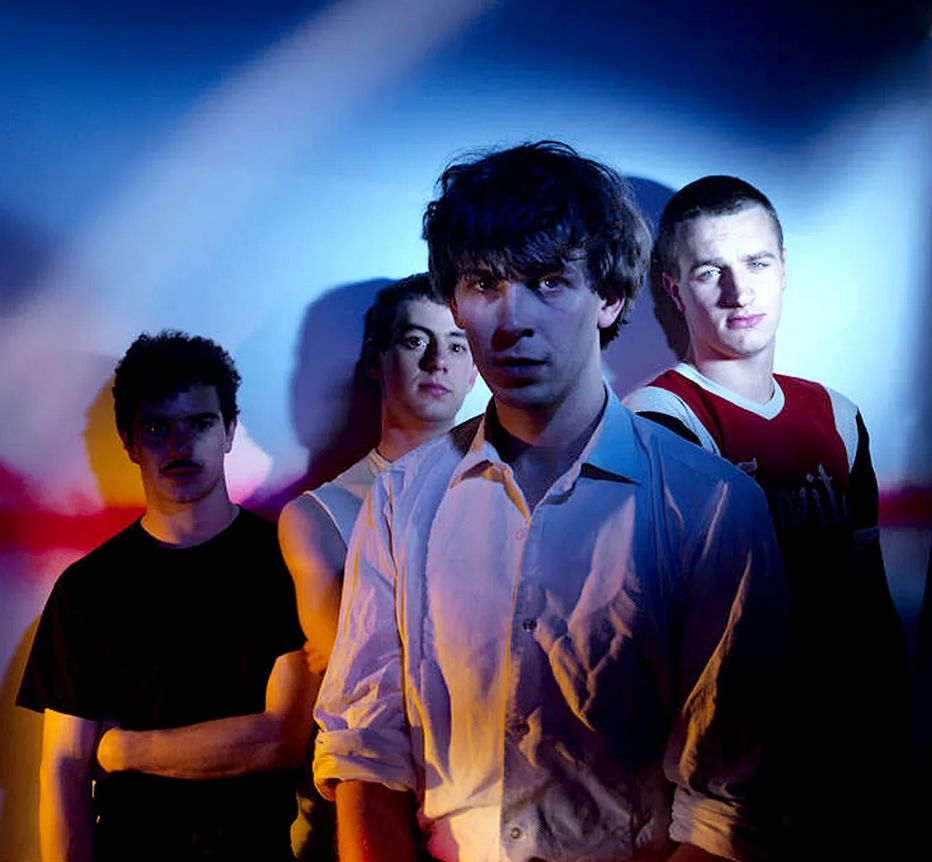
This week in 1981's new entries bubbling under the top 100 are certainly an odd bunch. Among them we have a group who never landed a top 100 hit in Australia, a single for which the A and B-sides were switched in Australia only, and a song from a German-American country artist that only 'charted' in Australia. Let's take a look.
The Teardrop Explodes did not quite 'explode' on the Australian charts.
Beyond the top 100:
Position 22 "When I Dream" by The Teardrop Explodes
Highest rank: 2nd
Peak dates: 31 August 1981 and 21 September 1981
Weeks on below list: 13 weeks
British band The Teardrop Explodes formed in Liverpool in 1978. "When I Dream", their debut single, peaked at number 47 in the UK in October 1980, and was lifted from the band's first album Kilimanjaro (number 92, June 1981). This track was the band's only release to make a (very small) ripple on the Australian chart. Despite missing the top 100, "When I Dream" hung around on the beyond number 100 list for several months. The group disbanded in 1982.
The Teardrop Explodes' lead singer Julian Cope will, however, land a top 60 solo 'hit' in Australia with "World Shut Your Mouth" (number 51, March 1987). We will see Julian bubble under in 1987 and 1995.
Position 25 "Diddy Doo Wop (I Hear the Voices)" by Daryl Hall & John Oates
Highest rank: 15th
Peak date: 25 May 1981
Weeks on below list: 3 weeks
At this point in 1981, American duo Daryl Hall & John Oates had placed six singles on the Australian top 100 chart, with "Rich Girl" (number 6, June 1977) being the biggest of those.
From what I can gather, "Diddy Doo Wop (I Hear the Voices)" was the B-side of the Daryl Hall & John Oates single "You've Lost That Lovin' Feelin'" in the rest of the world. In Australia, however, the sides were flipped, and "Diddy Doo..." was the A-side on the single, with "...Lovin' Feelin'" relegated to being the B-side. I am guessing this might have happened as another version of The Righteous Brothers' "You've Lost That Lovin' Feelin'", performed by Long John Baldry with Kathi McDonald, was a major hit in Australia in 1980, reaching number 2 in July 1980. Hall and Oates' Australian record company probably thought it was too soon for another version of the same song to become a hit; not that their strategy of flipping the sides for this single worked either.
Both "Diddy Doo Wop..." and "You've Lost That Lovin' Feelin'" were lifted from Hall and Oates' ninth studio album Voices (number 19, November 1980).
The "You've Lost That Lovin' Feelin'"-led version of this single peaked at number 55 in the UK in September 1980, and at number 12 on the US Billboard Hot 100 in November 1980.
Hall and Oates would next bubble under in Australia in 1990.
Position 28 "I Just Wonder Where He Could Be Tonight" by Hilka
Highest rank: 3rd
Peak date: 1 June 1981
Weeks on below list: 6 weeks
Thankfully, the rear sleeve of German singer Hilka Cornelius' one and only studio album Hilka contains a short biography on her, as I couldn't otherwise find much information online. Hilka's family emigrated to Salt Lake City in Utah when she was 13 years old. She trained as a school teacher in Texas, teaching German, Russian and Spanish, before realising that her passion lied with singing. Hilka was one half of singing comedy duo Denim and Lace.
"I Just Wonder Where He Could Be Tonight" does not appear to have charted anywhere else. Hilka landed a minor 'hit' on the US Billboard Hot Country Songs chart, however, with "(I'm Just the) Cuddle Up Kind" reaching number 96 in February 1980.
Hilka landed a top 50 'hit' in Australia with "Who Were You Thinking of" (number 47, February 1981), credited to Hilka and The Doolittle Band - although I cannot hear Hilka's voice on this, and the lead vocal is sung by a man.
Next post (1 June): The next Kent Music Report beyond the top 100 post will not be until 1 June, owing to there being no new singles bubbling under on 18 May or 25 May 1981 that missed the top 100. On the next post, there will be three new entries.
Of the twelve new entries I write about from this week in 1991, eight of them did not make the top 40 anywhere that I can ascertain (and none of these are Australian artists). Before we take a look, I have updated the following earlier posts with the following:
10 April 1989 - a new bubbling WAY down under entry from Tony Llewellyn;
23 October 1989 - new bubbling WAY down under entries from Tony Llewellyn and Scary Bill;
The Farm: all together in ARIA chart no man's land.
Top 150 debuts:
Number 118 "Mad About You" by Sting
Peak: number 109
Peak date: 29 April 1991
Weeks in top 150: 6 weeks
Top 150 chart run: 118-109-112-115-125-131
Weeks on chart: 7 weeks
We last saw Sting bubble WAY down under in November 1990. "Mad About You" was the second single issued from Sting's third solo studio album The Soul Cages (number 3, February 1991). It followed "All This Time" (number 26, February 1991).
Internationally, "Mad About You" peaked at number 56 in Sting's native UK in March 1991, number 44 in the Netherlands in March 1991, and number 59 in Germany in May 1991.
Within Australia, "Mad About You" performed strongest in Western Australia, where it reached number 80.
I don't recall hearing "Mad About You" before, but, presumably it received some airplay, as Australian FM radio loved Sting and his former band The Police during this period.
Few would have predicted that "All This Time" would become Sting's final solo (non-collaboration) top 40 hit in Australia, at the time.
"Mad About You" dented the Australian Music Report top 100 singles chart, peaking at number 95.
American rapper John B. Shaffer III, better known as Candyman, scored a number 9 hit on the US Billboard Hot 100 in November 1990 with "Knockin' Boots", a song I became acquainted with via the American Top 40 radio show. The single did not perform as well in Australia, peaking at number 58 in January 1991.
"Melt in Your Mouth" was the second single from Candyman's debut album Ain't No Shame in My Game (number 142, January 1991). The single peaked at number 69 in the US in February 1991, and at number 41 in the Netherlands in April 1991. Candyman effectively became a one-hit wonder, or, in Australia, a not-quite one-hit wonder.
I hadn't heard "Melt in Your Mouth" before. The song's chorus and melodic hook are lifted from The Spinners' "Could It Be I'm Falling in Love" from 1972.
"Melt in Your Mouth" peaked higher on the Australian Music Report singles chart, where it reached number 94.
We last saw English band Happy Mondays in August 1990. "Loose Fit" was the third single lifted from the band's third studio album Pills 'n' Thrills and Bellyaches (number 98, March 1991).
"Loose Fit" peaked at number 17 the UK in March 1991, and at number 71 in the Netherlands in May 1991. It's interesting (or so I think) how the peak positions for "Loose Fit" in various countries are all combinations of the numbers one and seven.
Domestically, "Loose Fit" performed strongest in South Australia/Northern Territory, where it reached number 53.
I have heard "Loose Fit" before, and like it, but could not remember how the song went until listening to it again to write this post.
Owing to the Gulf War taking place in early 1991, the "Gonna buy an airforce base, gonna wipe out your race" lyric was edited out of "Loose Fit" for the single's release in the UK. I remember reading about sillier censorship decisions by the BBC around the time of the Gulf War, such as banning Bangles' "Walk Like an Egyptian" (number 1, February 1987). That's the kind of censorship you might expect from the US.
English band The Farm last graced us with their presence in January 1991. "All Together Now" was the second single from the band's first studio album Spartacus (number 106, May 1991).
An early version of "All Together Now", titled "No Man's Land", was written after the band's singer Peter Hooton, who had trained as a history teacher, read an article about the unofficial Christmas truce between British and German soldiers during the first World War in 1914. The troops ditched their weapons to play a game of football on 'no man's land', the space between their trenches. The song was performed live on John Peel's Radio 1 show in 1983. When recording the song in 1990, producer Suggs (from Madness) suggested the chorus lyric should be "all together now". The song interpolates German baroque composer Johann Pachelbel's "Canon in D".
The single peaked at number 4 in the UK in December 1990, number 9 in the Netherlands in February 1991, number 13 in the Flanders region of Belgium in February 1991, number 5 in Germany in March 1991, and number 18 in Switzerland in April 1991.
On the state charts, "All Together Now" performed strongest in South Australia/Northern Territory, where it reached number 66. The single also crept into the Australian Music Report top 100 singles chart, peaking at number 96.
Here's one I had never heard of before. Harriet, whose full name is Harriet Roberts, is a soul singer from Sheffield in the UK. Interestingly, this track was her only release to dent the UK (compressed) top 100, spending a solitary week at number 100 on the compressed chart (number 129 on the uncompressed chart with no exclusions below number 75) in August 1990.
"Temple of Love" was lifted from the album Woman to Man; Harriet's only album release. A much dancier version of the track, which I prefer, was released as the single version in Germany and Japan.
Bizarrely, "Temple of Love" was released in Australia in October 1990, taking six months to scrape into the top 150. In the interim, Harriet released another single locally, "Woman to Man", in January 1991, but it missed the top 150.
Number 150 "Funk Boutique" by The Cover Girls
Peak: number 150
Peak date: 22 April 1991
Weeks in top 150: 1 week
Top 150 chart run: 150
Weeks on chart: 3 weeks
The only song by New York-based freestyle group The Cover Girls I had heard before is one that we will see in 1992.
"Funk Boutique", which is quite sparse in lyrics, appears to have been an in-between albums release that was eventually included on the group's third studio album Here It Is (number 236, September 1992) in 1992.
"Funk Boutique" peaked at number 55 on the US Billboard Hot 100 in March 1991.
Domestically, "Funk Boutique" was most popular in New South Wales/Australian Capital Territory, where it reached number 144.
The Cover Girls will make their second and final appearance on the ARIA singles chart in 1992.
Bubbling WAY down under:
Number 154 "All I Want Is You" by Surface
Peak: number 154
Peak date: 22 April 1991
Weeks on chart: 1 week
You can tell from the first few seconds of this track that it's going to be a slickly-produced r&b lurve ballad... and that's exactly what it is, listening to this track for the first time.
Surface last 'surfaced' (ho ho) on the ARIA top 150 in February 1991. "All I Want Is You" was another single from the group's third studio album 3 Deep (number 146, April 1991).
Surprisingly, "All I Want Is You" did not chart on the US Billboard Hot 100. It did, however, reach number 8 on the US Billboard R&B/Hip-Hop Songs chart in April 1991... for what that's worth.
Locally, "All I Want Is You" was most successful in New South Wales/Australian Capital Territory, where it reached number 147.
"All I Want Is You" would be Surface's last single to chart in Australia.
Number 158 "G.L.A.D." by Kim Appleby
Peak: number 158
Peak date: 22 April 1991
Weeks on chart: 2 weeks
We first saw Kim Appleby in January 1991. "G.L.A.D.", short for good lovin' and devotion, was the second single lifted from Kim's debut solo album Kim Appleby (number 159, April 1991). The song was co-written with Kim's late sister Melanie, who was the other half of Mel & Kim, and Craig Logan, the former Bros member who Kim was dating at this time.
G.L.A.D. was going to be the title of Mel & Kim's second album, which never eventuated, following F.L.M. (number 2, August 1987) and sticking with the alphabet letters theme. Kim launched her solo career nine months after Mel's passing in January 1990. She was driven to showcase the songs she and Mel had written during Mel's illness, as a tribute to her sister.
"G.L.A.D." was remixed from the original album version for its single release by Phil Harding and Ian Curnow, the B-team at Stock Aitken Waterman (who produced the F.L.M. album). The track features a rap from Aswad's Brinsley Ford.
Internationally, "G.L.A.D." reached number 10 in the UK in February 1991, number 7 in Ireland, number 6 in the Flanders region of Belgium in April 1991, and top 20 in Germany, the Netherlands and Switzerland.
Within Australia, "G.L.A.D." performed strongest in Victoria/Tasmania, where it reached number 138.
Unlike Kim's previous single, I heard "G.L.A.D." at the time, catching the video on Channel 10's short-lived Coca-Cola Power Cuts as a new release.
A third single from the Kim Appleby album, "Mama", was released in Australia in June 1991, but failed to chart. It did, however, give Kim a third and final solo top 20 hit in the UK, peaking at number 19 there in July 1991.
We last saw Welsh singer Tom Jones in 1989. "Couldn't Say Goodbye" was the lead single from Tom's 32nd studio album Carrying a Torch (released in Australia in July 1991, did not chart).
Internationally, "Couldn't Say Goodbye" peaked at number 51 in the UK in January 1991. In Australia, the single performed strongest in New South Wales/Australian Capital Territory, where it reached number 161 on the state chart.
I hadn't heard "Couldn't Say Goodbye" until listening to it while writing this post. I actually chuckled to myself when I saw that the song was co-written by beige songwriter extraordinaire Diane Warren, as it's exactly the kind of schmaltz she is responsible for. I did think to myself "I bet this one was written by Diane Warren" before checking the credits.
Tom will join us next in 1995.
Number 180 "Now That We've Found Love" by Love in Effect featuring Jazzie B
Love in Effect was an ensemble of artists who came together to release this single and nothing else. I assume the track was recorded for charity, as these things usually are, but cannot find any evidence of such.
The artists featured in Love in Effect include Soul II Soul's Jazzie B (the only one to receive a featuring credit), Ben Vopeliere-Pierrot from Curiosity Killed the Cat, Ruby Turner, Diana Brown and Barry K. Sharpe, The Wee Papa Girl Rappers, Jeninne Levy, and Jay Williamson.
This version of "Now That We've Found Love" missed the UK top 75, and peaked at number 80 in the Netherlands in March 1991. The single was most-successful in New Zealand, where it reached number 25 in May 1991.
Within Australia, "Now That We've Found Love" performed strongest in New South Wales/Australian Capital Territory, where it reached number 167.
Number 191 "Don't Hold Back Your Love" by Daryl Hall & John Oates
Peak: number 161
Peak date: 29 April 1991
Weeks on chart: 5 weeks
We last saw Daryl Hall & John Oates in December 1990, with the lead single from the duo's fourteenth studio album Change of Season (number 137, February 1991). "Don't Hold Back Your Love" was the second and final single released from the album in Australia.
Internationally, "Don't Hold Back Your Love" peaked at number 41 on the US Billboard Hot 100 in February 1991.
In Australia, "Don't Hold Back Your Love" performed strongest in Western Australia, where it reached number 108.
Australian singer Daryl Braithwaite would go on to score a bigger 'hit' with this song later in 1991. His version of "Don't Hold Back Your Love" peaked at number 55 in October 1991, and spent 23 weeks on the chart.
As it is unlikely I will be writing these chart recaps by the time it gets to 2010 (as my interest in new music drops off sharply by the turn of the century), I can reveal now that Hall and Oates landed one further charting single in Australia - "You Make My Dreams", which originally peaked at number 40 in October 1981, re-entered the ARIA singles chart in March 2010, peaking at number 106 during the same month. Despite the low peak, "You Make My Dreams" has gone on to spend 167 weeks on the chart and has been certified triple platinum by ARIA in December 2019. Don't you just love these anomalies of the streaming era?
We will next see Daryl Hall, sans John Oates, in 1994.
Number 194 "Deal for Life" by John Waite
Peak: number 194
Peak date: 22 April 1991
Weeks on chart: 1 week
English rock singer John Waite has joined us previously, fronting the band Bad English, in 1990. John first came to fame as the lead singer of British rock group The Babys, whose biggest hit in Australia was "Isn't It Time" (number 1, March 1978). The Babys scored a second top 10 hit in Australia, with "Every Time I Think of You" (number 6, April 1979).
John then embarked on a solo career, and landed a major hit with "Missing You" (number 5 for five weeks in October 1984). However, it would be his only solo top 50 single in Australia. John then fronted Bad English, who had a top 5 hit with "When I See You Smile" (number 4 for two weeks in January-February 1990).
John returned to his solo career to record "Deal for Life" for the Days of Thunder soundtrack (number 31, September 1990), which also contained Maria McKee's "Show Me Heaven" (number 3 for five weeks in December 1990-January 1991), Elton John's "You Gotta Love Someone" (number 32, November 1990), and Guns N' Roses' "Knockin' on Heaven's Door" (number 12, August 1992).
Internationally, "Deal for Life" peaked at number 83 (number 80 on the compressed chart) in the UK in December 1990.
In Australia, "Deal for Life" was most popular in Western Australia, reaching number 156 on the state chart.
We'll next see John on his own in 1994.
Next week(29 April): Two top 150 debuts and four bubbling WAY down under entries. Also, my 1981 Kent Music Report beyond the top 100 recaps will resume on Wednesday (27 April) next week.
Welcome to the last chart survey of 1990! It doesn't seem like that long since I was rounding off 1989.
Among this week in 1990's batch of singles peaking outside the top 100 are several artists who've been around for a while, but were now not having so much luck on the charts. We also have some upcoming dance and alternative artists - the chart seemed to cater for both genres equally in the early 1990s.
Before diving into this week's new entries, I have updated an earlier post:
- 24 July 1989 - with a newly uncovered bubbling WAY down under entry from Lisa Lisa & Cult Jam.
Daryl Hall & John Oates: so close to the top 100.
Top 150 debuts:
Number 121 "So Close" by Daryl Hall & John Oates
Peak: number 106
Peak date: 7 January 1991
Weeks in top 150: 11 weeks
Chart run: 164-122-(chart repeated for 2 week Xmas break)-106-116-116-118-114-118-130-124
Weeks on chart: 12 weeks
American duo Daryl Hall and John Oates placed 18 singles on the Australian top 100 between 1976 and 1988. Surprisingly, only two of those, "Rich Girl" (number 6, June 1977) and "Maneater" (number 4, December 1982), reached the top ten. Given how much Australian radio loved Hall & Oates, if you were around in the early-mid 80s, you would assume the pair would have had a string of number one hits. That was the case in the US, where the duo notched up six Billboard Hot 100 number ones. I am actually shocked that "Private Eyes" (number 17, December 1981) did not even make the top 10 in Australia; it seems like it would have been a number one here, to me.
Despite only making the Australian top 10 singles chart twice, Hall & Oates had another four top 20 hits in Australia, with "Out of Touch" - my favourite - narrowly missing the top 10, peaking at number 11 in December 1984. Oddly, the "Out of Touch" music video seems to be blocked on YouTube, at least in Australia.
A combination of a three-and-a-half-year gap between albums and popular music styles shifting is probably responsible for Hall & Oates' chart fortunes waning significantly on the Australian chart in the second half of the 1980s. "Everything Your Heart Desires" (number 75, June 1988), the duo's last single to register in the top 100, stalled in the lower half of the top 100, and was the only charting release from Hall & Oates' previous studio album Ooh Yeah! (number 46, June 1988). The second and final single issued from the album in Australia, "Missed Opportunity", lived up to its title, and failed to chart.
"So Close" was the lead single from Hall & Oates' fourteenth studio album Change of Season (number 137, February 1991).
In my mind, the US charts at this point in time were an odd marriage between 'new'-sounding (mainly r&b) music, that hadn't quite crossed over properly in Australia, and 'safe' music your parents would approve of that seemed quite dated (think of all of those overwrought ballads that seemed to hog the top spot on the Billboard Hot 100). Accordingly, Hall & Oates' commercial success continued in the US for a while longer than it did elsewhere, and both "Everything Your Heart Desires" (number 3, June 1988) and "So Close" (number 11, December 1990) were decent-sized hits there. "So Close" was the duo's final Billboard Hot 100 single to reach the top 40, however.
Elsewhere, "So Close" peaked at number 69 in the UK in September 1990, and number 4 in Canada in December 1990.
Within Australia, "So Close" was most popular in Victoria/Tasmania, where it reached number 81.
While Hall & Oates' would not trouble the top 150 again with a contemporary release, in the streaming era, where anything can chart, their 1983 rendition of "Jingle Bell Rock" reached number 36 in December 2020, and could better that peak this year or in subsequent years - anything can happen, it seems, with the Christmas chart these days.
We will see Daryl Hall & John Oates again in April 1991.
Number 123 "Heaven" by Angry
Peak: number 102
Peak date: 7 January 1991
Weeks in top 150: 8 weeks
Top 150 chart run: 123-(chart repeated for 2 week Xmas break)-102-103-115-129-138
Angry Anderson, real name Gary Stephen Anderson, dropped his surname for the era of his debut - and only, depending on how that is counted (read on to see what I mean) - solo album, Blood from Stone (number 35, October 1990). Prior to going solo, Angry was the lead singer of Australian pub rock band Rose Tattoo, who landed 11 singles on the Australian top 100 between 1977 and 1987. Rose Tattoo's biggest hit was surprisingly not"We Can't Be Beaten" (number 28, December 1982), but "Bad Boy for Love" (number 19, January 1978).
Angry launched his solo career with "Suddenly" (number 2, August 1987), a song that is best known for its use as the soundtrack to Scott (Jason Donovan) and Charlene (Kylie Minogue)'s wedding on the Australian TV soap opera Neighbours in July 1987. This exposure led to "Suddenly" reaching number 3 in the UK and Ireland in December 1988, when the wedding belatedly aired there.
What confuses me is that "Suddenly" originally appeared on the Rose Tattoo album Beats from a Single Drum (number 35, December 1986), which was later re-issued as a solo Angry Anderson album (including in Australia - so not just following the 'solo' success of "Suddenly" overseas), despite having the same songs on it. Can anyone enlighten me on what happened here?
"Heaven" was the second single lifted from Blood from Stone. It followed "Bound for Glory" (number 11, October 1990), which was used as an unofficial anthem for the 1990 Australian Football League grand final - not that I give a toss about that.
"Heaven" was Angry's last foray into the ARIA top 150, and was the final single released from Blood for Stone.
"Heaven" reached number 99 on the Australian Music Report singles chart.
Angry is better known these days for being an aspiring Liberal (that is, economically liberal and socially conservative, as the Australian 'Liberal' Party is) politician, in spite of his 'rough' bikie gang appearance and working class roots, who occasionally pops up on shows like A Current Affair or SBS's Go Back to Where You Came From, where he was quite outspoken against "boat people".
Number 132 "Imagine" by John Lennon
Peak: number 132
Peak date: 17 December 1990 (chart repeated 24 December 1990 and 31 December 1990)
Weeks in top 150: 3 weeks
Top 150 chart run: 132-(chart repeated for 2 week Xmas break)
Weeks on chart: 415 weeks (as of 9 February 2022)
Now onto an artist who promoted peace and social justice - so long as you were not an unwanted child of his (sorry, I couldn't help myself). John Lennon was, of course, shot by a crazed fan in December 1980, and died shortly afterwards, aged 40.
"Imagine" was recorded in 1971, and topped the Australian singles chart. It re-entered the chart following John's untimely death, reaching number 43 in March 1981. More-recently, "Imagine", backed with "Happy Christmas (War Is Over)", peaked at number 21 in December 1988.
I'm not sure exactly what led to "Imagine" re-charting in 1990.
Number 138 "The Real Thing (1990 Mix)" by Russell Morris
Peak: number 124
Peak date: 7 January 1991
Weeks in top 150: 4 weeks
Top 150 chart run: 138-(chart repeated for 2 week Xmas break)-124
Another oldie re-charted this week in 1990... "The Real Thing" was first released in 1969, and topped the Australian Go-Set (as it was then) singles chart. The song was produced by Ian "Molly" Meldrum, who of course went on to host the iconic Australian music TV program Countdown between 1974 and 1987.
Australian electronic act Third Eye had recently covered "The Real Thing". Their version of the song peaked at number 76 in October 1990, which presumably prompted this remix of the original, by Mike Duffy.
If you ask me (and this is my site, so I'll give my 2 cents' worth anyway), this remix is pretty pointless, and doesn't sound terribly '1990' to my ears, for that matter.
This version of "The Real Thing" was included on Russell's A Thousand Suns (number 98, November 1991) album.
Peak date: 17 December 1990 (chart repeated 24 December 1990 and 31 December 1990)
Weeks in top 150: 3 weeks
Top 150 chart run: 141-(chart repeated for 2 week Xmas break)
Doug Anthony Allstars are an Australian comedy trio, who at this point in time were made up of Paul McDermott, Tim Ferguson, and Richard Fidler. However, "Bottle" sounds like it is only Paul McDermott singing, unless the other two were playing instruments, which I don't think they were, although Richard Fidler also played guitar.
"Bottle" was the only single from the trio's debut and only studio album DAAS Icon (number 42, June 1990).
My favourite thing with loose Doug Anthony All Stars connections is the flop (which means it was good, right?) ABC 1970s cop drama parody series from 1995, Funky Squad, in which Doug Anthony All Stars member Tim Ferguson played one of the main characters. If you haven't seen it, the seven episodes are on YouTube, and it is worth checking out alone for the real 1970s TV commercial breaks featured within it.
Number 145 "Fascinating Rhythm" by Bass-O-Matic
Peak: number 145
Peak date: 17 December 1990 (chart repeated 24 December 1990 and 31 December 1990)
Weeks in top 150: 3 weeks
Top 150 chart run: 145-(chart repeated for 2 week Xmas break)
Weeks on chart: 4 weeks
Bass-O-Matic, alternatively stylised as Bassomatic and BassOmatic (such inconsistencies annoy me!), were an electronic group from Sheffield, England. One of the group members was William Orbit, who went on to become quite a successful producer for other artists, such as Madonna, All Saints, Robbie Williams, and Blur, among others. The group was fronted by singer Sharon Musgrave and rapper MC Inna Onestep.
"Fascinating Rhythm" was Bass-O-Matic's second single, following "In the Realm of the Senses", which was issued in Australia in July 1990 but missed the top 150. Both tracks were lifted from their debut album Set the Controls for the Heart of the Bass.
Internationally, "Fascinating Rhythm" peaked at number 9 in the UK in September 1990, number 18 in Ireland, and number 47 in the Netherlands in November 1990.
On the ARIA state charts, "Fascinating Rhythm" performed strongest in Western Australia, where it reached number 107.
"Fascinating Rhythm" was Bass-O-Matic's only single to chart in Australia.
Number 147 "Cloud Factory" by Clouds
Peak: number 118
Peak date: 11 March 1991
Weeks in top 150: 21 weeks
Top 150 chart run: 147-(chart repeated for 2 week Xmas break)-(out for 1 week)-140-148-147-144-149-128-128-133-118-119-130-(out for 3 weeks)-141-145-147-142-145-149-(out for 3 weeks)-150
Weeks on chart: 26 weeks
1991 is often cited as the year that 'alternative' music - that is, music that is not primarily motivated by achieving major commercial success - became mainstream, with the success of Nirvana's Nevermind album towards the end of the year.
There were signs of an alternative music commercial breakthrough on the Australian chart earlier in 1991, however, when Sydney indie band Ratcat topped the singles charttwice in the space of a month, and also had a number one album. But even before then, there were occasional ripples of mainstream success for indie artists on the Australian chart, such as The Hummingbirds' "Blush" creeping into the top 20 in September 1989, or even R.E.M.'s "Orange Crush" becoming a top 20 hit in February 1989.
Clouds, who were usually referred to as 'The Clouds' despite there being no 'The' in the band's name on their album or single sleeve artwork, were a Sydney indie rock band who achieved some moderate commercial success on the ARIA chart in the early 1990s. "Cloud Factory" was Clouds' debut release. Interestingly, the track does not appear on the band's debut album Penny Century (number 23, October 1991), but was included on a 2-CD expanded re-issue of it in 1996.
Like many avid pop/chart fans at the time who weren't old (or perhaps 'cool') enough to listen to Triple J, I first became aware of Clouds when this and the band's next single, the Loot EP (number 22, June 1991) - led by the track "Soul Eater", were vying for number one position on the ARIA Alternative Chart as shown on Channel 10's Coca-Cola Power Cuts music video TV program (does anyone reading this remember that?).
I have previously expressed my disdain for Billboard's stupid genre-specific charts, based on dubious methodology, and I feel similarly about ARIA's - though at least ARIA has/had 100% sales-based singles and albums charts, unlike Billboard. Furthermore, unless you were a chart freak or religiously watched Coca-Cola Power Cuts in 1991 (the only year it was on air), you probably wouldn't even be aware that ARIA had Alternative and Dance charts.
Without bothering to check when it actually happened, ARIA's Dance chart was eventually sales-based, unlike Billboard's, and just extrapolated from the weekly national chart. The ARIA Reports from this era state that "the ARIA Alternative Charts are compiled using sales data supplied by Alternative Music Retailers in each capital city." As a Victorian, 'alternative music retailers' makes me think of Melbourne's Au Go Go Records store, which closed in 2003 (this makes me feel very old). I guess the Sydney equivalent might be Red Eye Records, which seems to still be operating.
While "Cloud Factory" was not a massive success on the ARIA national singles chart, it reached number two on the ARIA Top 20 Alternative Singles chart (Coca-Cola Power Cuts only showed excerpts from the top 10) in April 1991. At one point in April 1991, both "Cloud Factory" and Loot were in the Alternative top 10 together, and remained so until September 1991, although "Cloud Factory" dipped out of the top 10 for a couple of weeks in June and August. In July 1991, Loot was number one and "Cloud Factory" was number two on the ARIA Alternative Singles Chart. How is that for 'alternative' facts success?
Despite only peaking at number 118 on the national chart, "Cloud Factory" spent 21 non-consecutive weeks in the top 150, which holds the record for the most weeks in the top 150 for a single that peaked outside the top 100, at least until the end of 1995 (as far as I have obtained with these top 150 charts at the time of writing). "Cloud Factory" was still charting as late as 24 June 1991 - more than six months after its top 150 debut.
On the state charts, "Cloud Factory" performed strongest in New South Wales/Australian Capital Territory, where it reached number 95.
We will next see Clouds in 1993.
Bubbling WAY down under:
Number 159 "Cubik"/"Olympic" by 808 State
Peak: number 159
Peak date: 17 December 1990 (chart repeated 24 December 1990 and 31 December 1990)
Weeks on chart: 4 weeks
English electronic band 808 State (pronounced "eight oh eight state") formed in Manchester in 1987. Only one single and one album released by the group in Australia reached the ARIA top 100: their first single released locally, "Pacific" (number 82, March 1990), and the album 808:90 (number 97, May 1990).
Both "Cubik" and "Olympic" were lifted from 808 State's third album ex:el (number 109, April 1991). The double A-sided single reached number 10 in the UK in November 1990, and number 23 in Ireland during the same month.
On the ARIA state charts, "Cubik"/"Olympic" performed strongest in Western Australia, where it reached number 114.
Although I enjoy some of 808 State's singles, I have to say that the riff used on "Cubik" reminds me a little too much of one of those ear-bleeding ringtones some people use on their phones. I don't think I had heard "Olympic" before.
Peak date: 17 December 1990 (chart repeated 24 December 1990
and 31 December 1990)
Weeks on chart: 3 weeks
English reggae band Aswad formed in West London in 1975, but
did not score their first (and only real) hit in Australia until 1988, with
their version of "Don't Turn
Around" (number 34, June 1988) - a song co-written by Diane Warren
that was originally recorded by Tina Turner
as a B-side for her "Typical Male"
(number 20, November 1986) single. The song would also later be covered by Ace of Base, who landed a number
20 hit with it in August 1994. Interestingly, Aswad's version of
"Don't Turn Around" was much bigger in Western Australia, where it
reached number 3 on the state chart, than elsewhere in Australia (its next
highest state-chart peak was number 29 in South Australia/Northern Territory).
While "Don't Turn Around" had been Aswad's only
prior charting single in Australia, their Distant Thunder album peaked
at number 68 on the Western Australia state albums chart (it did not chart
nationally - when the chart ended at number 100) in July 1988, and their Crucial
Tracks (Best of Aswad) compilation reached number 145 in October 1989.
"Next to You" was the lead single from Aswad's
ninth studio album Too Wicked (number 157, April 1991). Internationally, "Next to You" peaked at number 24
in the UK in September 1990, number 18 in the Netherlands in September 1990,
number 46 in the Flanders region of Belgium in September 1990, and number 31 in
New Zealand in March 1991.
Within Australia, "Next to You" performed
strongest in New South Wales/Australian Capital Territory, where it reached
number 147.
We shall next see Aswad in 1994.
Number 165 "Kiss the Ground" by Real Life
Peak: number 161
Peak date: 28 January 1991
Weeks on chart: 4 weeks
Australian electronic band Real Life landed six singles on the Australian top 100 chart between 1983 and 1990, with "Send Me an Angel" (number 6, July 1983) and "Catch Me I'm Falling" (number 8, March 1984) reaching the top ten. Both tracks even registered on the US Billboard Hot 100, although the 1989 version of "Send Me an Angel" became their biggest hit there, reaching number 26 in July 1989.
"Kiss the Ground" was the second and final single from Real Life's third studio album Lifetime (number 120, October 1990), their first album since 1985. It followed "God Tonight" (number 83, October 1990), which performed much stronger in Victoria/Tasmania than in other states, where it reached number 39.
On the state charts, "Kiss the Ground" performed strongest in Western Australia, where it reached number 129.
"Kiss the Ground" was Real Life's final single to chart.
Number 166 "Missing You" by Soul II Soul featuring Kym Mazelle
Peak: number 166
Peak date: 17 December 1990 (chart repeated 24 December 1990 and 31 December 1990)
Weeks on chart: 3 weeks
Soul II Soul are, as described on their Wikipedia page, a British "musical collective". 'Collective' is the right word, as the only constant in the band seems to have been founding member Jazzie B (real name Trevor Beresford Romeo).
Soul II Soul's first Australian release was their third single "Keep on Movin'" (number 77, September 1989), featuring Caron Wheeler - whom we saw last week - on vocals. So far, Soul II Soul had placed five singles within the ARIA top 100, with "A Dreams a Dream"(sic) (number 27, June 1990), featuring Victoria Wilson-James on vocals, being the most successful of those.
"Missing You" was the third single lifted from Soul II Soul's second album Vol. II (1990 - A New Decade) (number 9, June 1990). It followed "A Dreams a Dream" and "People" (number 90, October 1990). This time, American singer Kym Mazelle was on vocal duties.
Kym had released a couple of solo singles in Australia at this point - "Wait" (a duet with Dr. Robert from The Blow Monkeys, released in Australia in March 1989), "Useless (I Don't Need You Now)" (July 1989), "Was That All It Was" (March 1990), and a remix of "Useless..." (July 1990) - but none of these charted.
Internationally, "Missing You" peaked at number 22 in the UK in December 1990, number 24 in Ireland in November 1990, and number 74 in the Netherlands in December 1990.
On the ARIA state charts, "Missing You" was most successful in Western Australia, where it reached number 130.
We will next see Soul II Soul in 1992, while Kym Mazelle will join us in 1994.
Number 168 "Soundtrack to a Generation" by The Human League
Peak: number 168
Peak date: 17 December 1990 (chart repeated 24 December 1990 and 31 December 1990)
Weeks on chart: 3 weeks
British group The Human League formed in 1977 in Sheffield. Between 1981 and 1990, they placed eight singles on the Australian top 100, with "Don't You Want Me" (number 4, July 1982) and "Mirror Man" (number 4, February 1983) peaking the highest. We first saw The Human League bubble under on the first ARIA singles chart to extend beyond number 100, in January 1989.
"Soundtrack to a Generation" was the second and final single from The Human League's sixth studio album Romantic? (number 115, November 1990), their first studio album since 1986. Their previous single "Heart Like a Wheel" (number 64, October 1990) - my favourite Human League single - was the band's last to dent the ARIA top 100 singles chart.
In the band's homeland, "Soundtrack to a Generation" peaked at number 77 in December 1990, the only other place it charted.
I don't recall hearing "Soundtrack to a Generation" before. You have to admire a song whose chorus begins with "holy cow"...
We will next see The Human League in 1995.
Next chart (7 January): Owing to the Christmas breaks ARIA took with the chart prior to 1997, the next chart survey conducted was not until 7 January 1991. The new year kicks off with seven top 150 debuts and one bubbling WAY down under entry.
Here is a preview of some of the songs we will see in my 1991 chart recaps in 2022:
In 1991, we will see 251 singles peaking in the 101 to number 150 region of the chart, and (at the time of writing this) a further 87 singles debuting and peaking outside the top 150. That's at least 338 songs I have to listen to and write about next year...
As with 1989, I will post a summary of all of all of the singles debuting on the ARIA singles chart in 1990 that peaked between numbers 101 and 150, before the year is out.
Thank you for reading my posts this year. Hopefully you have discovered or re-discovered some new old songs you like!