05 February 2021

Week commencing 5 February 1990

This week's post is a bumper week for new entries, with no fewer than 11 top 150 debuts and one bubbling WAY down under entry!  I had a look at the rest of the year, and 11 is the record for top 150 debuts in 1990.  At the other end of the spectrum, there is only one new top 150 debut one week in August 1990.  Interestingly, this week's post contains more debuts peaking between number 101 and 150 than we will see for the entire month of August 1990!  Let's dive in to this week's 12 new entries.

Transvision Vamp: the Australian record-buying public were not quite 'sold' on this release.
 
Top 150 debuts:
 
Number 111 "I'm Not the Man I Used to Be" by Fine Young Cannibals
Peak: number 109 
Peak date: 12 February 1990
Weeks in top 150: 6 weeks
Top 150 chart run: 111-109-114-129-125-134
Weeks on chart: 8 weeks
 
Up until this point, all eight of Fine Young Cannibals' previous singles had made the Australian top 100, with six of those making the top 20.  The group's biggest single down under had been "She Drives Me Crazy", which was number one for three weeks over two separate stints at the top, in March and April 1989.

The Cannibals' hit-making streak in Australia came to a crashing halt with "I'm Not the Man I Used to Be", the fourth single lifted from The Raw & The Cooked (number 1, July 1989).  Quite why this single stalled, I am not sure, although most people who wanted to own it had probably already purchased the album.
 
"I'm Not the Man I Used to Be" performed stronger on the Australian Music Report chart, where it peaked at number 96.  On the state charts, the single was most popular in Queensland and Western Australia, peaking at number 85 on both charts.
 
While the single was a modest hit (given their fast-paced charts at the time) in the band's native UK, peaking at number 20 for two weeks in December 1989, it was, at least, an improvement on the number 34 UK peak of previous single "Don't Look Back" (number 38 in Australia, October 1989).  Internationally, "I'm Not the Man I Used to Be" was a top 30 hit in the Netherlands and Austria, a top 40 hit in Germany, and had its greatest success in Ireland, where it peaked at number 8.

What few people would have predicted, including myself, is that there would be no more top 40 singles for Fine Young Cannibals - in Australia, anyway - owing largely to The Raw & The Cooked being the band's final studio album.  The band only released two studio albums during its existence, plus a greatest hits compilation in 1996, for which they recorded a new song, "The Flame" (number 85, November 1996).

Fine Young Cannibals will be back with another single from The Raw & The Cooked in April.


Number 115 "Prayer for You" by Texas
Peak: number 101
Peak date: 12 February 1990
Weeks in top 150: 5 weeks
Chart run: 151-(off chart for 1 week)-115-101-117-125-121
Weeks on chart: 6 weeks


Hailing from Glasgow, Scotland - in spite of the band name - Texas burst onto the ARIA singles chart in 1989 with "I Don't Want a Lover" (number 4, September 1989).  Follow-up singles "Thrill Has Gone" (number 60, September 1989) and "Everyday Now" (number 52, November 1989) struggled to replicate this success.  "Prayer for You", released as the fourth and final single from Southside (number 14, November 1989), had even less success, just falling short of the top 100.
 
It was a similar story in the band's native UK, where "I Don't Want a Lover" peaked at number 8 in March 1989, and subsequent Southside singles all missed the top 40.  "Prayer for You" continued the pattern of diminishing returns, peaking at number 73 in the UK in December 1989.
 
On the state charts, "Prayer for You" performed strongest in South Australia/Northern Territory, where it peaked at number 76.
 
Although Texas would return to the ARIA top 100 singles chart a couple of times in the early 90s, they would not score another sizeable hit in Australia again until 1997, with "Say What You Want" (number 11, June 1997).  We shall next see Texas bubble under in 1992.


Number 136 "Make Believe Mambo" by David Byrne
Peak: number 136
Peak date: 5 February 1990
Weeks in top 150: 3 weeks
Top 150 chart run: 136-144-145
 
David Byrne was the lead vocalist in Talking Heads, who notched up nine top 100 singles in Australia between 1979 and 1986, with three of those making the top 20; the highest-peaking of which was "And She Was" (number 10, March 1986).  Although the band's 1988 album Naked peaked at number 8 in Australia, it spawned no charting singles.  Talking Heads disbanded in December 1991, after band members learnt that Byrne had left through an article published in the Los Angeles Times; he had not otherwise informed the group of his intention to quit.

David Byrne released a solo album 1981, and the follow-up studio album Rei Momo (number 96, January 1990) was released in the last quarter of 1989, from which this track is lifted.

While David's solo career didn't exactly set the Australian charts alight, we will see him again in 1992.


Number 137 "Heat of the Moment" by After 7
Peak: number 107 (number 123 in 1990; number 107 in 1991)
Peak date: 8 April 1991
Weeks in top 150: 15 weeks (9 weeks in 1990; 6 weeks in 1991)
Top 150 chart run: 137-140-(out for 9 weeks)-128-134-135-129-123-125-133.
Re-entered 25 March 1991: 125-131-107-128-125-126
Weeks on chart: 18 weeks
 
If my memory serves me correctly, here we have the first instance of a single peaking outside the top 100 that had two separate (as in a year apart) chart runs.

"Heat of the Moment" was first released in Australia in January 1990, and peaked at number 123 in May 1990.  But even its first chart run was split in two, spending two weeks in the top 150 in February 1990, and then re-entering towards the end of April 1990, spending a further seven weeks in this region of the chart.   The group then released the singles "Ready Or Not" in August 1990 - which did not chart in Australia, and "Can't Stop" in December 1990 (number 80, February 1991).  "Heat of the Moment" was then again issued in March 1991, reaching its peak of number 107 in April 1991, and spending another 6 weeks on the chart.  "Heat of the Moment" fared much better in New South Wales/Australian Capital Territory, where it reached number 61 in April 1991, than elsewhere.  Its next-highest state chart peak was number 100 in Victoria/Tasmania, where it peaked in May 1990.

Listening to "Heat of the Moment" for the first time as I write this, I am struck by how similar the music backing sounds to Pebbles' "Giving You the Benefit" (number 48, January 1991).  Both tracks are L.A. Reid/Babyface compositions and productions, though.

"Heat of the Moment" is lifted from the After 7 album, which peaked at number 124 in Australia in February 1990.

We will see After 7 again in 1992.


Number 139 "Born to Be Sold" by Transvision Vamp
Peak: number 108
Peak date: 12 March 1990
Weeks in top 150: 7 weeks
Top 150 chart run: 139-(out for 1 week)-140-116-112-108-126-120
Weeks on chart: 8 weeks

During 1988 and 1989, Transvision Vamp placed seven singles in the ARIA top 100, with two of those reaching the top 10: "I Want Your Love" (number 7, December 1988) and "Baby I Don't Care" (number 3, August 1989).  The group's popularity down under was cemented with two platinum-certified albums, Pop Art (number 13, February 1989) and Velveteen (number 2, July 1989).

Despite this success, Transvision Vamp's singles chart peaks seemed to drop off quickly by the time it got to the third and fourth single releases from their albums, with "Tell That Girl to Shut Up" (number 44, February 1989), "Sister Moon" (number 95, June 1989), and "Landslide of Love" (number 70, November 1989) all missing the top 40.  "Born to Be Sold" would continue the trend, becoming the band's first release to peak outside the ARIA top 100; although it just scraped into the Australian Music Report top 100 singles chart at number 97.
 
Speaking of trends, "Born to Be Sold", like Billy Joel's recent hit "We Didn't Start the Fire" (number 2, November 1989) and The Beloved's upcoming flop "Hello" (number 94, May 1990), was a 'list' song.  That is, its verses list a number of cultural icons - in this instance, pop singers, film stars and politicians.  Among others, Elvis, Madonna and Morrissey get name-checked, and Transvision Vamp singer Wendy James (well, via songwriter and bandmate Nick Christian Sayer) declares herself, like the other people listed, as being "born to be sold".
 
Wendy, who loved to court controversy, copped some flack for comparing herself to 'the greats' with this song in at least one of the pop magazines I read at the time.  Those who followed pop music in the late 80s will no doubt remember some of Wendy's infamous comments slagging off other pop stars, particularly Kylie Minogue, who she once described as "pollution of the mind."  Ouch!  Still, at least Wendy had opinions, unlike many heavily stage-managed and media-trained artists.

On the state charts, "Born to Be Sold" performed strongest in Victoria/Tasmania, where it peaked at number 71.  Internationally, the single peaked at number 22 in the group's native UK in November 1989, and at number 12 in Ireland.
 
Fun fact: I bought this single on cassette at the time; just as I had bought Transvision Vamp's last single, "Landslide of Love", on the same format.  I obviously showed a precocious interest in flop singles as an 11 year-old.  One of the B-sides on the "Born to Be Sold" single, a live rendition of "Last Time", contained some naughty S and F-words delivered by Wendy when speaking to the audience during the intro - but there was no parental advisory sticker on the sleeve!  Ooh-er!

We won't see Transvision Vamp bubble under again, as the two singles from their third and final studio album in 1991 both made the top 100.  We will, however, see Wendy James in 1993, when she embarks on a solo career, after the demise of the band.
 

As a special treat, because I find it so funny - and it seems to have been taken down everywhere online - embedded below is French and Saunders' parody of Transvision Vamp/Wendy James' Star Test interview.  The song in the clip parodies the list-song format of "Born to Be Sold", with everything relating back to Wendy and her faux modesty (check out the "me me me me" chorus).


Number 143 "Insect" by Boxcar
Peak: number 143
Peak date: 5 February 1990
Weeks in top 150: 3 weeks
Top 150 chart run: 143-(out for 7 weeks)-149-(out for 1 week)-145
Weeks on chart: 4 weeks

Boxcar, hailing from Brisbane, were Australia's answer to New Order.  Well, minus the commercial success, unfortunately.  Their debut single, "Freemason (You Broke the Promise)", released in November 1988, failed to chart locally, but made some ripples on the US Billboard Dance chart, where it peaked at number 8.  OK, I know I've said before that such genre-specific Billboard charts, based on god knows what, are not 'real' charts, but I'm trying to be generous here, for an act responsible for some songs that I like.

"Insect", the band's second single, was released locally in November 1989, but took until now to register on the chart.  Fitting with the song title and the lyrical theme of being "crushed" like an insect by an ex, the music video contains numerous scenes of praying mantises, ants and the like, and is not one recommended for those with entomophobia (look it up!).  But the song itself is definitely worth a listen.

Released on Australian dance music label Volition, "Insect" was produced by pioneering Australian electronic/dance music producer and remixer Robert Racic, who was involved with many late 80s/early 90s home-grown dance releases, such as the 1994 remix of Severed Heads' "Dead Eyes Opened" (number 16, January 1995), Beatfish "Wheels of Love" (number 26, September 1991), and Sexing the Cherry's "Steppin' On" (number 42, May 1994).  Racic, sadly, passed away in 1996 from AIDS.

Boxcar would criminally peak no higher than number 82 on the ARIA singles chart, with "Gas Stop (Who Do You Think You Are)" reaching that position in January 1991. "Insect", "Freemason" and "Gas Stop" all appear on the band's debut album Vertigo (number 118, February 1991).  I don't think that Australia was ready to embrace electronic music made by local bands yet - radio certainly wasn't, instead preferring to stick with a staple of pub rock bands, "classic rock" and Cold Chisel.  Ugh.
 
Boxcar will bubble under a number of times in the coming years, with the next occasion being in 1991.


Number 144 "Don't Make Me Over" by Sybil
Peak: number 144
Peak date: 5 February 1990
Weeks in top 150: 2 weeks
Top 150 chart run: 144-(out for 2 weeks)-148
Weeks on chart: 5 weeks

Sybil Lynch, known mononymously as just Sybil, hails from America, and is Maxine Jones from En Vogue's cousin.  Although her version of Dionne Warwick's "Don't Make Me Over" was a number 20 hit for her on the US Billboard Hot 100 in December 1989, Sybil had the most career success in the UK, where she notched up three top 10 hits, and this song peaked at number 19 in October 1989.
 
The album this track is lifted from, Sybil, also contains a cover of Dionne Warwick's "Walk on By", which was a number 6 hit for her in the UK in February 1990.  Both the album and that single failed to chart in Australia.  Sybil later worked with Stock Aitken Waterman, or their Stock/Waterman incarnation, and some of the songs they produced made the ARIA chart.

While Sybil never peaked higher than number 144 in Australia, we will see her bubble under a few more times in the coming years, with the next occasion being in October.


Number 145 "It's Gonna Change" by Blow featuring Roy Hamilton
Peak: number 145
Peak date: 5 February 1990
Weeks in top 150: 1 week
Top 150 chart run: 145
 
I can't tell you much about Blow, other than it's an alias of house music producer and DJ, Gordon Edge, whose real name is Gordon Laing Matthewman.  Likewise, I can't tell you much about Roy Hamilton, other than his father, also named Roy Hamilton, was a singer from Jamaica.  Together, they released this acid house track, which does not appear to have charted anywhere else.


Number 146 "The Yuppie Rap" by Club Veg
Peak: number 146
Peak date: 5 February 1990
Weeks in top 150: 1 week
Top 150 chart run: 146

Here's an Australian comedy release I missed at the time, probably due to being too young to listen to Triple J.  Club Veg were duo Vic Davies and Malcolm Lees, and they started out as The Morning After Show on radio station Triple J in 1984, before migrating to 2SM in 1986, and then Triple M in 1988.

"The Yuppie Rap" was issued as a single in September 1988, featuring Barry Dink on vocals.  I am not sure why the single charted nearly 18 months later.  The B-side featured New Zealand singer Dave Dobbyn on vocals.

Vic Davies died from lung cancer in 2009.


Number 147 "We Almost Got It Together" by Tanita Tikaram
Peak: number 116
Peak date: 19 March 1990
Weeks in top 150: 7 weeks
Chart run: 165-147-124-139-126-134-133-116
Weeks on chart: 8 weeks
 
Tanita graced our presence twice in 1989, with "Good Tradition" (number 142, January 1989) and "Cathedral Song" (number 120, July 1989).  Her biggest, and only real hit in Australia was "Twist in My Sobriety" (number 23, April 1989).

"We Almost Got It Together" was the lead single from Tanita's second album The Sweet Keeper (number 68, February 1990), and peaked at number 52 in the UK in January 1990.  The single was also a top 30 hit in Ireland, a top 40 hit in the Netherlands and the Dutch-speaking region of Belgium (Flanders), and a top 50 hit in Germany.  One interesting thing about "We Almost Got It Together"'s chart run in Australia - if you're a chart freak, anyway - is that it didn't reach its peak until its final week on the chart, after which, it dropped out.

Subsequent singles released in Australia from The Sweet Keeper, "Little Sister Leaving Town" (May 1990) and "Thursday's Child" (August 1990), failed to chart.  Tanita will join us again, however, in 1995.


Number 149 "Quicksand" by Jimi the Human & Spectre 7
Peak: number 137
Peak date: 16 April 1990
Weeks in top 150: 9 weeks
Top 150 chart run: 149-(out for 1 week)-147-(out for 1 week)-138-144-140-143-139-141-137
 
Listening to this song as I write this, I didn't expect to know it, but the "walking in the quicksand" chorus sounds familiar. "Quicksand" was released back in early December 1989, but took until now to dent the top 150.
 
If you read the video description blurb for the clip embedded below - which appears to be uploaded by Jimi (Hocking) himself, you would be led to believe that the album this track is from, No Turning Back, was a top 20 success.  Um, hate to burst your bubble, man, but it wasn't.  In fact, the album peaked at number 101 on the ARIA albums chart in March 1990.  Top 20... on the Australian artists chart (another meaningless one), perhaps?  I have noticed that artists often have mistaken beliefs about their chart positions, and that they are prone to inflation.

This would be Jimi the Human & Spectre 7's only top 150 charting single.  "Quicksand" performed much better on the Australian Music Report singles chart, where it peaked at number 86.  You have to wonder, though, when there is a 51-place discrepancy between the ARIA and AMR peaks...


Bubbling WAY down under:

Number 153 "Action" by Steve Stevens Atomic Playboys
Peak: number 153
Peak date: 5 February 1990
Weeks on chart: 1 week

We saw Steve Stevens Atomic Playboys bubble under in November 1989.  "Action" was the second single lifted from the Steve Stevens Atomic Playboys (number 67, October 1989) album, and, likes its predecessor, appears to have only charted in Australia!  The song was a cover version of a song The Sweet took to number 4 in Australia in November 1975.
 
This was the band's final release.


Next week (12 February): I would normally expect a quieter week after one with 11 debuts, but no, next week there are another 9 top 150 debuts!  Obviously, a clear-out was happening in the lower region of the charts.  On top of that, there are 3 bubbling WAY down under entries for me to write about.  I had better get cracking...  You can also follow my posts on instagram and facebook.
 
< Previous week: 29 January 1990                                   Next week: 12 February 1990 >

29 January 2021

Week commencing 29 January 1990

This week marks a year since ARIA extended the Australian singles chart beyond number 100, and when I started writing these recaps.  If you're just discovering this blog, you've got some reading to catch up on!  But if trawling through a year's worth of posts isn't your thing, there's a search box you can use on the right to search for specific artists or songs, to see whether they've charted outside the ARIA top 100 so far.  Alternatively, I made a post earlier this month which just lists the singles that peaked between number 101 and number 150 for 1989.
 
I can't identify a common thread among this week's new entries, other than I hadn't heard five of the six debuts before.  Let's take a look at them.
 
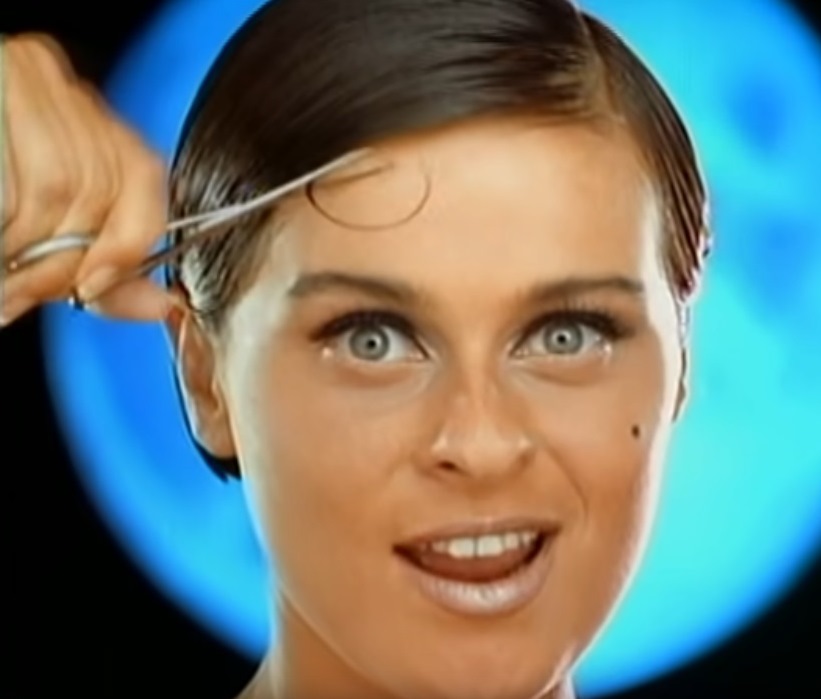
Lisa Stansfield: doing home haircuts since 1990.
 
Top 150 debuts:
 
Number 119 "All That You Have Is Your Soul" by Tracy Chapman
Peak: number 119
Peak date: 29 January 1990
Weeks in top 150: 6 weeks
Chart run: 119-125-133-124-138-129
Weeks on chart: 6 weeks

Tracy Chapman's chart career in Australia started off promisingly, with "Fast Car" peaking at number 4 in June 1988.  Subsequent singles from her Tracy Chapman album (number 2, July 1988) fared less well on the chart, with "Talkin' 'bout a Revolution" peaking at number 67 in September 1988 (it would eventually peak one place higher in 2011), and "Baby Can I Hold You" peaking at number 68 in February 1989.

Now onto her second album, Crossroads (number 4, October 1989), "All That You Have Is Your Soul" was the album's second release, following the title track, which peaked at number 58 in October 1989.  Tracy would have to wait until 1995 to score a second decent-sized hit single down under, with "Give Me One Reason" (number 3, February 1996).
 
Although "All That You Have Is Your Soul" - which I had not heard until writing this - failed to set the Australian charts alight, it does not appear to have charted anywhere else.  On the state charts, "All That You Have Is Your Soul" performed best in South Australia/Northern Territory, where it peaked at number 86.

Tracy will bubble down under again in 1996.


Number 141 "Hold Me" by Wildland
Peak: number 141
Peak date: 29 January 1990
Weeks in top 150: 1 week
Top 150 chart run: 141

Australian band Wildland scored their first chart entry, and biggest hit, in 1989 with their debut single "One for Unity" (number 53, August 1989).  "Hold Me" was the follow-up, released back in October 1989, but somehow took until now to dent the lower region of the chart.  Both singles were lifted from the band's In This Lifetime album (number 80, June 1990).

We will see Wildland on two more occasions this year, with the next time being in March.


Number 145 "Lean on You" by Cliff Richard
Peak: number 107
Peak date: 12 February 1990
Weeks in top 150: 8 weeks
Chart run: 145-108-107-118-121-114-119-122
Weeks on chart: 8 weeks
 
"Lean on You" was the third single from Cliff's Stronger album (number 16, April 1990), following "The Best of Me" (number 59, August 1989) and the Stock Aitken Waterman-produced "I Just Don't Have the Heart" (number 100, October 1989).  Listening to this track for the first time as I write this post, it reminds me a little bit of Cliff's "Some People" (number 7, April 1988), only not as good.

"Lean on You" fared significantly better in Cliff's native UK, where it peaked at number 17 in October 1989.  "Lean on You" also performed stronger on the Australian Music Report singles chart, where it peaked at number 93.
 
On the state charts, "Lean on You" performed much stronger in South Australia/Northern Territory than elsewhere, where it reached number 43.

Cliff will become a regular visitor to this section of the chart in the coming months, with this being the first of three of his singles to peak outside the top 100 in 1990.  Cliff would need to wait until 1995 to score another top 100 hit down under, with his live duet with Phil Everly "All I Have to Do Is Dream" (number 93, March 1995), and until 1999 to score another (his last) top 50 single in Australia with "The Millennium Prayer" (number 2, December 1999).

We will next see Cliff in March.


Number 146 "This Is the Right Time" by Lisa Stansfield
Peak: number 138
Peak date: 28 May 1990
Weeks in top 150: 4 weeks
Top 150 chart run: 146.  Re-entered 28 May 1990: 138-(out for 1 week)-139-149
Weeks on chart: 6 weeks
 
Before embarking on a solo career, Lisa scored a minor 'hit' down under with her former band Blue Zone, "Jackie" (number 99, February 1989).  Yes, the same "Jack-Jack-Jackie" song that became a hit for B.Z. featuring Joanne in 1998.  Despite only peaking at number 99, "Jackie" spent 15 weeks in the top 150.  Then, Lisa scored another minor hit in Australia as the featured vocalist on Coldcut's "People Hold On" (number 78, June 1989).

Lisa then struck out on her own... well, kind of.  You see, although Blue Zone was her "band", the other members of the group, Andy Morris and Ian Devaney, continued to collaborate with Lisa throughout her solo career.  Ian and Andy were more than OK with Lisa being the sole representative of the 'band', doing promotional work/interviews etc. while they remained out of the spotlight.  So "Lisa Stansfield" is, essentially, a 'band' - but Lisa is the only visible member.  Make sense?

Lisa's "solo" career was launched with "This Is the Right Time", produced by recent collaborators Coldcut.  The single peaked at number 13 in the UK in August 1989.  Released in Australia in October 1989, it was finally the right time for this single to make a dent on our chart, spurred on by the ascent of Lisa's second solo single, "All Around the World" (number 9, February 1990), which was at number 13 this week.
 
But if you thought that was complicated, "This Is the Right Time" wouldn't actually peak on the ARIA chart until the end of May 1990, after a re-release following the next single, "Live Together" (number 62, March 1990).  All three of these singles were lifted from Lisa's Affection album (number 7, February 1990) - an album I purchased on the strength of "All Around the World", although "This Is the Right Time" was my favourite song on it.  A fourth single from Affection, "What Did I Do To You?" was released in Australia in July 1990, but failed to chart.
 
On the state charts, "This Is the Right Time" performed strongest in New South Wales/A.C.T., where it peaked at number 117.

Two music videos were filmed for "This Is the Right Time" - the original 1989 version, filmed for the UK market, is currently blocked on YouTube.  A second video was filmed for the single's US release in 1990 (it peaked at number 21 there in June 1990), embedded below, and memorably shows Lisa snipping off her trademark 'kiss curl' with a pair of scissors at the start.

Lisa will become a regular visitor to this region of the chart in the coming years - no fewer than nine of her singles charted outside the ARIA top 100 during the 1990s!  The next time we see Lisa will be in 1992.


Number 149 "Shanghaid" by J.J. Cale
Peak: number 149
Peak date: 29 January 1990
Weeks in top 150: 1 week 
Top 150 chart run: 149

J.J. Cale, real name John Weldon Cale, is best known for his 1977 single, "Cocaine", which I am shocked to discover only peaked at number 45 in Australia in June 1978.  The song did, however, top the New Zealand singles chart in March 1977.

"Shanghaid" was lifted from the album Travel-Log (number 102, January 1990), Cale's first studio album since 1983.  "Shanghaid" does not appear to have charted elsewhere.

J.J. Cale passed away in 2013, aged 74, due to a heart attack.


Bubbling WAY down under:
 
Number 161 "So Sorry, I Said" by Liza Minnelli
Peak: number 161
Peak date: 29 January 1990
Weeks on chart: 1 week
 
Liza Minelli scored her first chart hit in 1989 with "Losing My Mind" (number 72, November 1989), despite already being a familiar name, through her work as an actress and stage performer, and being Judy Garland's daughter.  Liza was aged 43 at this point, which seemed 'old' to me - for a pop star, as an 11 year-old boy.

Like "Losing My Mind", "So Sorry, I Said" was another track from the Pet Shop Boys-produced album Results (number 94, January 1990).   In the UK, "Don't Drop Bombs" was issued as the second single from the album, but did not receive a local release.  I was going to surmise that "Don't Drop Bombs" was skipped because it flopped there (number 46, October 1989), but "So Sorry, I Said" performed even worse (number 62, December 1989) - so who knows what the record company's rationale was.

A fourth single from Results, "Love Pains", was released as the album's third single locally in April 1990, but failed to chart here.  "So Sorry, I Said" would become Liza's second and final single to chart in Australia.


Next week (5 February): a bumper week with eleven new top 150 debuts and one bubbling WAY down under entry!  You can also follow my posts on instagram and facebook.
 
< Previous week: 22 January 1990                                      Next week: 5 February 1990 >

22 January 2021

Week commencing 22 January 1990

One thing I can tell you about all of the songs I write about this week is that I didn't hear any of them at the time... and there are a few tragic stories about the artists in question!  Let's take a look.
 
Natalie Cole: Wild women... sometimes take their time to peak, and sometimes they miss the top 150 altogether.
 
 
Top 150 debuts:
 
Number 127 "Fever" by Joe Cocker
Peak: number 112
Peak date: 5 February 1990
Weeks in top 150: 8 weeks 
Chart run: 127-116-112-134-132-131-137-135
Weeks on chart: 8 weeks
 
I wasn't aware until now that Joe had covered this song, which was originally recorded by Little Willie John in 1956, with the most-famous version recorded by Peggy Lee in 1958.
 
Released as the second single from Joe's One Night of Sin album (number 32, October 1989), following "When the Night Comes" (number 39, November 1989), "Fever" only charted in Australia and New Zealand, where it peaked at number 46 in February 1990.
 
On the state charts, "Fever" performed strongest in South Australia/Northern Territory, where it reached number 82.

We lost Joe Cocker in December 2014 from lung cancer, aged 70.

Joe will be a regular visitor to this region of the chart in the coming years, notching up no fewer than five singles that peaked between numbers 101 and 150 in the coming three years.  We will see Joe again twice this year, with the next occasion being in May.


Number 136 "That's What They Always Say" by Chris Rea
Peak: number 123
Peak date: 5 February 1990
Weeks in top 150: 6 weeks 
Chart run: 136-136-123-139-137-140 
Weeks on chart: 6 weeks

A quick aside - the title of this track, which I hadn't heard before, makes me think of Mary Roach's legendary American Idol audition, where she says "'that's what they always say in theatre" in response to someone saying 'break a leg' to her, before she entered the audition room.  If you haven't seen that audition, it's worth checking out...  Ah, bless Mary and her white flares.

Now onto the Chris Rea song.  "That's What They Always Say" was the second single lifted from Chris's The Road to Hell album (number 35, November 1989), following "The Road to Hell (Part 2)" (number 78, November 1989).  "That's What They Always Say" peaked at number 83 in the UK in December 1989, and number 35 in France in May 1990.
 
In Australia, "That's What They Always Say" performed strongest in Western Australia, reaching number 78 on the state chart.

Sadly, 69 year-old Chris has endured a number of major health problems over the years, including multiple surgeries for pancreatic cancer, diagnosed in 2000, and a stroke in 2016.  In a Daily Mirror article in 2014, Chris revealed that he takes thirty-four tablets and has seven injections a day, following the complete removal of his pancreas and part of his digestive tract.

We will see Chris again in 1991, where he narrowly misses the top 100.


Number 145 "Big Talk" by Warrant
Peak: number 111
Peak date: 19 February 1990
Weeks in top 150: 10 weeks
Chart run: 145-113-121-130-111-134-128-112-127-134
Weeks on chart: 10 weeks
 
Warrant first bubbled WAY down under in July 1989, and hadn't had much chart success in Australia with any of the singles from their debut album, Dirty Rotten Filthy Stinking Rich (number 72, November 1989).  "Heaven" was the biggest of the bunch, peaking at number 54 in October 1989.  "Big Talk" had marginally more success in the band's native US, where it peaked at number 93 on the Billboard Hot 100 in November 1989.
 
On the state charts, "Big Talk" performed strongest on the Victoria/Tasmania state chart, where it peaked at number 70.

One notable thing about the music video for "Big Talk" is that the 'dirty rotten filthy stinking rich' record company fat cat type depicted on the album sleeve comes to life.  The video is worth watching for that alone.

Warrant singer Jani Lane sadly passed away from acute alcohol poisoning in August 2011, aged 47.  Jani was never comfortable with being known as "the 'Cherry Pie' guy" - after Warrant's biggest hit (number 6, January 1991), as evident in this interview on YouTube, in which he ominously says, "I could shoot myself in the f**king head for writing that song."

Warrant will join us again in March.


Number 150 "Call It Love" by Poco
Peak: number 150
Peak date: 22 January 1990 and 5 February 1990
Weeks in top 150: 2 weeks
Top 150 chart run: 150-(out for 1 week)-150
 
Poco are (they are still active, according to Wikipedia) an American country rock band formed in 1968 (!).  Although I'd never heard of them before, they actually placed two singles on the Australian chart in the 1970s, with the biggest one being "Rose of Cimarron" (number 51, February 1977).  They also had six charting albums in Australia between 1971 and 1980.

"Call It Love", as you might expect, performed much better in the US, where it peaked at number 18 in April 1989.  Released in Australia on 6 November 1989, "Call It Love" took over two months to dent the top 150, where it spent two non-consecutive weeks at number 150.  While it's not the usual sort of thing I listen to, I did enjoy the minor chord (or perhaps it's just a key change - I'm not quite musically-gifted enough to know for sure) guitar bridge leading into the chorus.

To my surprise, this song was also a hit of sorts in the Dutch-speaking world, peaking at number 20 in the Netherlands in November 1989, and number 38 in the Flanders region of Belgium (Belgium has two separate charts: one each for the Dutch and French-speaking regions) in December 1989.

"Call It Love" was lifted from the band's Legacy album (number 136, February 1990).  Another single from the album, "Nothin' to Hide", was released locally in February 1990, but missed the top 150.


Bubbling WAY down under:

Number 162 "As a Matter of Fact" by Natalie Cole
Peak: number 162
Peak date: 22 January 1990
Weeks on chart: 1 week

Natalie's previous single, "Miss You Like Crazy" (number 34, October 1989), was a slow burner on the Australian chart, taking six weeks to crack the top 100, 13 weeks to break the top 50, and 20 weeks to reach its peak.  Nat would perform a similar feat with subsequent single, "Wild Women Do" (number 37, September 1990), which took 5 weeks to crack the top 100, and 24 weeks to both break the top 50 and reach its peak.

Released as the second single from her Good to Be Back album (number 87, September 1989) in Australia, "As a Matter of Fact" had a much shorter chart life, spending just one week on the chart, outside the top 150.  Curiously, the single took two months to dent the charts, being released locally on 20 November 1989.  "As a Matter of Fact" failed to chart elsewhere.

Poor Nat had inconsistent success on the Australian charts, with each of her seven top 100 singles in Australia being from a different album.  To add insult to injury, her 1988 single "Everlasting" made each of the state top 100 charts at different times in September-October 1988, but failed to dent the national top 100 (this was before ARIA extended the chart beyond number 100).

Unfortunately, Natalie is no longer with us, having passed away from heart failure at the end of 2015, aged 65.

Natalie will join us again in 1991.


Next week (29 January): Five new top 150 entries, including the belated appearance of the debut solo single from a new act who had a big hit on their hands, and one bubbling WAY down under debut.  You can also follow my posts on instagram and facebook.

< Previous week: 15 January 1990                               Next week: 29 January 1990 >

15 January 2021

Week commencing 15 January 1990

Of the five songs I write about this week, I had only heard one of them at the time (the Malcolm McLaren one), which I barely remembered.  Two of this week's debuts - from overseas artists, no less - failed to chart anywhere else.  Let's take a look at them.
 
Adeva sings "we're almost there"... if 'there' is the top 150 this week.
  
Top 150 debuts:
 
Number 130 "Another Chance" by The Georgia Satellites
Peak: number 126
Peak date: 5 February 1990
Weeks in top 150: 6 weeks 
Top 150 chart run: 130-135-143-126-142-144

American band The Georgia Satellites scored two top 40 singles in Australia - "Keep Your Hands to Yourself" (number 20, March 1987) and "The Hippy Hippy Shake" (number 37, January 1989).   A third single, "Battleship Chains" (number 82, July 1987), dented the top 100.  "Another Chance" was lifted from the band's third album, In the Land of Salvation and Sin (number 132, January 1990), and failed to chart anywhere else.  This would be the band's final top 150 singles chart appearance in Australia.


Number 147 "Thrash" by Underworld
Peak: number 147
Peak date: 15 January 1990
Weeks in top 150: 1 week
Chart run: 147
Weeks on chart: 1 week 

Underworld's chart career in Australia started off promisingly, with "Underneath the Radar" peaking at number 5 in June 1988.  Subsequent singles from their Underneath the Radar album (number 32, August 1988) missed the top 50: "Glory! Glory!" (number 64, September 1988), "Show Some Emotion" (number 88, December 1988), and "I Need a Doctor" (released in Australia in February 1989, failed to chart).

"Thrash" was the second single released from the band's second album, Change the Weather (number 64, October 1989), following "Stand Up" (number 79, October 1989).  "Thrash" failed to chart anywhere else.  The title track was released as the third single from the album in late January 1990, but failed to chart.

One thing that is evident when looking at Underworld's Australian chart history is that the band were notably more popular in Western Australia than in other states.  "Underneath the Radar", for example, topped the Western Australian state chart, and "Glory! Glory!", "Show Some Emotion" and "Stand Up" all made the state top 40, despite missing the national top 60.  "Thrash" similarly peaked higher on the Western Australian state chart than in other states, peaking at number 105.

Underworld would undergo a metamorphosis and change in sound in the early 90s, and would eventually score their second (and last) hit single down under with "Born Slippy" in 1996 (number 20, January 1997).

We will see Underworld next in 1994.


Number 148 "I'll Be Good to You" by Quincy Jones featuring Ray Charles and Chaka Khan
Peak: number 148
Peak date: 15 January 1990
Weeks in top 150: 2 weeks
Top 150 chart run: 148-149
Weeks on chart: 2 weeks
 
Quincy Jones is perhaps best known for being the producer of Michael Jackson's Off the Wall, Thriller and Bad albums.  When it comes to charting under his own name, however, Quincy only landed one top 100 single in Australia - "Ai No Corrida" (number 74, July 1981).
 
"I'll Be Good to You" was originally recorded by The Brothers Johnson in 1976, but was produced by Quincy.  Chaka Khan, whom we last saw in September 1989, and Ray Charles provide vocals on this new version of the track, and appear in the music video embedded below.  "I'll Be Good to You" peaked at number 18 in the US in January 1990, and number 21 in the UK in February 1990.

On the ARIA state charts, "I'll Be Good to You" performed strongest in New South Wales/Australian Capital Territory, where it reached number 36.

We will next see Quincy in 1996, but before then, we will see a project he was involved with in 1991.  Chaka Khan will join us next in 1992.


Number 150 "House of the Blue Danube" by Malcolm McLaren and The Bootzilla Orchestra
Peak: number 150
Peak date: 15 January 1990
Weeks in top 150: 1 week
Known chart run: 152-150
Weeks on chart: 3 weeks
 
"House of the Blue Danube" was the third single lifted from Malcolm's Waltz Darling album (number 60, August 1989), and followed "Waltz Darling" (number 65, August 1989) and "Something's Jumpin' in Your Shirt" (number 95, November 1989).  "House of the Blue Danube" peaked at number 73 in Malcolm's native UK in November 1989.
 
Malcolm scored six top 100 hits under his own name (not counting associated acts, such as World's Famous Supreme Team) in Australia, all up, with the biggest of those being "Double Dutch" (number 14, September 1983).  However, arguably the Malcolm McLaren single that had the biggest cultural impact missed the top 100, and will be coming up later in the year.

On the state charts, "House of the Blue Danube" performed strongest in South Australia/Northern Territory, where it reached number 135.


Bubbling WAY down under:
 
Number 157 "Musical Freedom (Free At Last)" by Paul Simpson featuring Adeva
Peak: number 151
Peak date: 29 January 1990
Weeks on chart: 2 weeks
 
"Musical Freedom (Free At Last)" was first released in Europe in 1988, and featured Adeva - whom we saw back in July 1989 - on vocals.  It did not chart, however, until getting a re-release in 1989, following the success of "Respect" in the UK.  Interrupting an otherwise-consecutive run of three solo Adeva singles peaking at number 17, "Musical Freedom" peaked at number 22 in the UK in April 1989, and number 43 in the Netherlands in May 1989.
 
Released in Australia in September 1989, "Musical Freedom" took four months to dent the lower end of our chart, probably spurred on by the belated simultaneous ascent of "Warning!" (number 38, February 1990) and "I Thank You" (number 30, February 1990) on the charts in early 1990.

"Musical Freedom" deals with the subject of racial equality for African Americans, with upbeat lyrics such as "throw your hands up in the air, 'cause we're almost there".  Thirty plus years later, you have to wonder about that, given the current state of things in the USA.
 
One of the verses of "Musical Freedom" begins with the lyrics, "Lord knows I feel like throwing my hands up in the air", which bears a close resemblance - lyrically and melodically - to the opening lines of The Source featuring Candi Staton's "You Got the Love" ("Sometimes I feel like throwing my hands up in the air").
 
This would be Paul Simpson's - whom we saw in November 1989 - last foray onto the Australian charts.  Adeva will join us again in a few months' time.


Next week (22 January): Next week mirrors this week's chart, with four new top 150 debuts, and one bubbling WAY down under entry.  Among them is the first of five singles to bubble down under between 1990 and 1992 for a veteran artist.  You can also follow my posts on instagram and facebook.
 
< Previous week: 8 January 1990                                      Next week: 22 January 1990 >

08 January 2021

Week commencing 8 January 1990

Hey, it's the 90s!  Those of you who lived through the 90s may remember that expression being bandied about, as evidenced by this video.  And so this week, we enter the 1990s decade on the ARIA chart.
 
But before I start writing about that, I feel compelled to ask... where were you when the 90s clocked over?  I was 11 years old and about to start my final year of primary school, which in my state is grade 6.

The 90s are often - lazily, and somewhat inaccurately, in my view - summed up as being the decade where 'alternative' music became mainstream, and grunge music ruled.  While there's a kernel of truth there, the 90s was in no way just about that - dance music and rap also increased in popularity throughout the decade, and there were also plenty of schmaltzy, over-produced ballads that performed well on the charts.

But this blog isn't exactly focused on what was popular back then, right?  No, instead I'll be writing about the songs that didn't do so well on the chart - the songs you might have completely forgotten about, or simply weren't even aware of in the first place.
 
ARIA commenced producing The ARIA Report, a weekly chart publication only available via subscription (what the 'for detailed weekly chart information... send $100...' blurb on the printed top 50 charts - as embedded below - alluded to) in January 1990.  Although, this blurb was not printed on the top 50 charts until the end of April 1990:
If I'd had a clue that the 'detailed chart information' was the full top 100 charts, I would have cobbled enough pocket money together to subscribe in a jiffy!  Only, I remained clueless until late 1997, when I got the interwebz at home and quickly discovered Sarch's email list (were any readers out there also on that?), which sent out the top 100 singles chart every week (for free), until he stopped in early 1999.

In 1990, there were 272 singles that peaked between numbers 101 and 150 on the Australian singles chart.  Interestingly (well, if you're a stats nerd like me), none of these singles peaked at number 135, and only one peaked at number 113.  Let's take a look at the first instalment of them.
 
Katrina and The Waves: After 'Sunshine', Katrina and her pals didn't exactly make 'waves' on the Australian charts.
 
  
Top 150 debuts:
 
Number 123 "Harvest Moon" by James Reyne
Peak: number 122
Peak date: 15 January 1990 and 5 February 1990
Weeks in top 150: 6 weeks
Chart run: 123-122-138-127-122-141
Weeks on chart: 6 weeks
 
"Harvest Moon" was James' tenth solo single, the fourth and final release from his Hard Reyne album (number 7, May 1989), and the first to miss the top 100.  If a music video exists for this track, it has not been uploaded to YouTube, and also does not appear on the withdrawn-soon-after-its-release-and-subsequently-sells-for-silly-prices The Definitive Collection DVD shared with James' former band, Australian Crawl.  I have no recollection of hearing this song before, so it can't have been promoted too well.
 
On the state charts, "Harvest Moon" performed strongest in New South Wales/Australian Capital Territory, where it reached number 88.

James will next visit us solo in 1995.  Before then, we shall see him appear as part of a group in 1993.


Number 140 "Washaway" by The Shivers
Peak: number 104
Peak date: 5 February 1990
Weeks in top 150: 9 weeks
Top 150 chart run: 140-134-131-130-104-117-129-113-148
 
This is another track I have no recollection of - a common theme among this week's new entries.  While I can't muster many facts about this group, what I can tell you is that The Shivers were an Australian band, and their lead singer, Wendy Morrison, sang the theme song for the Australian TV series Sea Change in 1998 with Richard Pleasance, formerly of Boom Crash Opera.  I can also tell you that this single was released in early November 1989, and that the album it is lifted from, Big Love, missed the top 150.  "Washaway" performed better on the Australian Music Report singles chart, where it peaked at number 81.

The Shivers will visit us again in July.


Number 141 "You're the Reason" by Gene Pitney
Peak: number 103
Peak date: 5 February 1990
Weeks in top 150: 8 weeks 
Top 150 chart run: 141-137-119-137-103-131-130-136

Another recurring theme this week seems to be songs that don't have music videos - at least, not on YouTube, anyway.  I also didn't think I knew this one, but the melody seems vaguely familiar... and, to my surprise, I don't mind it!

Gene Pitney was 49 at this point in time, but seemed so old to me (for a pop star, anyway), when his duet with Marc Almond, "Something's Gotten Hold of My Heart" (number 24, April 1989) was on the chart.  That song had been Gene's first charting single in Australia since 1975.  Gene's biggest hits in Australia both peaked at number three - 1962's "(The Man Who Shot) Liberty Valance", and 1963's "Twenty Four Hours from Tulsa".
 
Gene gave a rather infamous TV performance of "You're the Reason" on UK TV in 1989, where he missed his cue, miming the song outdoors on a boat, and is wildly out of sync for the entirety of the song.
 
"You're the Reason" was lifted from the album You're the Reason (number 133, March 1990), and performed better on the Australian Music Report singles chart, where it peaked at number 81.
 
Had I been more clued-in to The ARIA Report, which I mentioned in the long intro blurb to this week's post, I would have noticed "You're the Reason" listed on the state chart summary, with a national HP (=High Point, aka highest position) of 119 on the ARIA Report dated week ending 28 January 1990:
 
These lists only seldom contained singles that were not within the national top 100, and such singles almost never had national HP's outside the top 100 listed.  Had I seen this in 1990, it would have alerted me to there being ARIA chart positions beyond number 100 - about 24 years earlier than I discovered this fact!  As you can see in the table above, "You're the Reason" did much better on the South Australia/Northern Territory state chart, where it peaked at number 21, than anywhere else.
 
Gene passed away in 2006, aged 66.


Number 146 "Rock 'n' Roll Girl" by Katrina and The Waves
Peak: number 146
Peak date: 8 January 1990
Weeks in top 150: 2 weeks
Known chart run: 155-(chart repeated for 2 week Xmas break)-146-149
Weeks on chart: 8 weeks
 
Finally we have a song with a music video on YouTube!
 
If you were not following the charts like a hawk in the 1980s, odds are, like me, you would have thought Katrina and The Waves had one song, "Walking on Sunshine" (number 4, June 1985), and that was it.  But they actually had a second top 40 hit in Australia, with "Do You Want Crying" (number 38, September 1985).

"Rock 'n' Roll Girl" was the second single lifted from the band's Break of Hearts album (number 127, January 1990), following "That's the Way" (number 58, November 1989).  "Rock 'n' Roll Girl" also charted in the UK, where it peaked at number 93 in November 1989.
 
On the state charts, "Rock 'n' Roll Girl" performed strongest in Western Australia, where it reached number 93.
 
Katrina and The Waves will join us again in 1997.


Bubbling WAY down under:
 
Number 157 "Baby Come to Me" by Regina Belle
Peak: number 157
Peak date: 8 January 1990
Weeks on chart: 2 weeks

American singer Regina Belle landed a major hit in Australia with her duet with Peabo Bryson, and theme song to Disney's 1992 movie Aladdin, "A Whole New World (Aladdin's Theme)", which reached number 10 in June 1993.  Unfortunately for Regina, none of her other releases - album or single - made the top 150 in Australia.

"Baby Come to Me" had greater, albeit modest, success in Regina's native US, where it peaked at number 60 in November 1989.

On the ARIA state charts, "Baby Come to Me" performed strongest in Western Australia, where it peaked at number 127.

Regina will join us again in 1993.


Number 158 Happy As Hell EP by Ed Kuepper and The Yard Goes On Forever 
Peak: number 158
Peak date: 8 January 1990
Weeks on chart: 2 weeks
 
West-German born, Australia-based Ed Kuepper was a guitarist and founding member of seminal Australian punk band The Saints, who formed in 1973.  He had been releasing solo material since 1985, and released three singles (no album) as Ed Kuepper and The Yard Goes On Forever between 1986 and 1989.  The Happy As Hell EP contained four tracks, led by the track "Sometimes (I Can't Live with Anyone)" (embedded below).
 
Ed will next join us, minus The Yard Goes On Forever, in 1992.


Next week (15 January): Four new top 150 debuts - three of which peak between numbers 147 and 150!  Plus the first bubbling WAY down under entry for 1990.  You can also follow my posts on instagram and facebook.
 
< Previous chart: 18 December 1989                                   Next week: 15 January 1990 >